
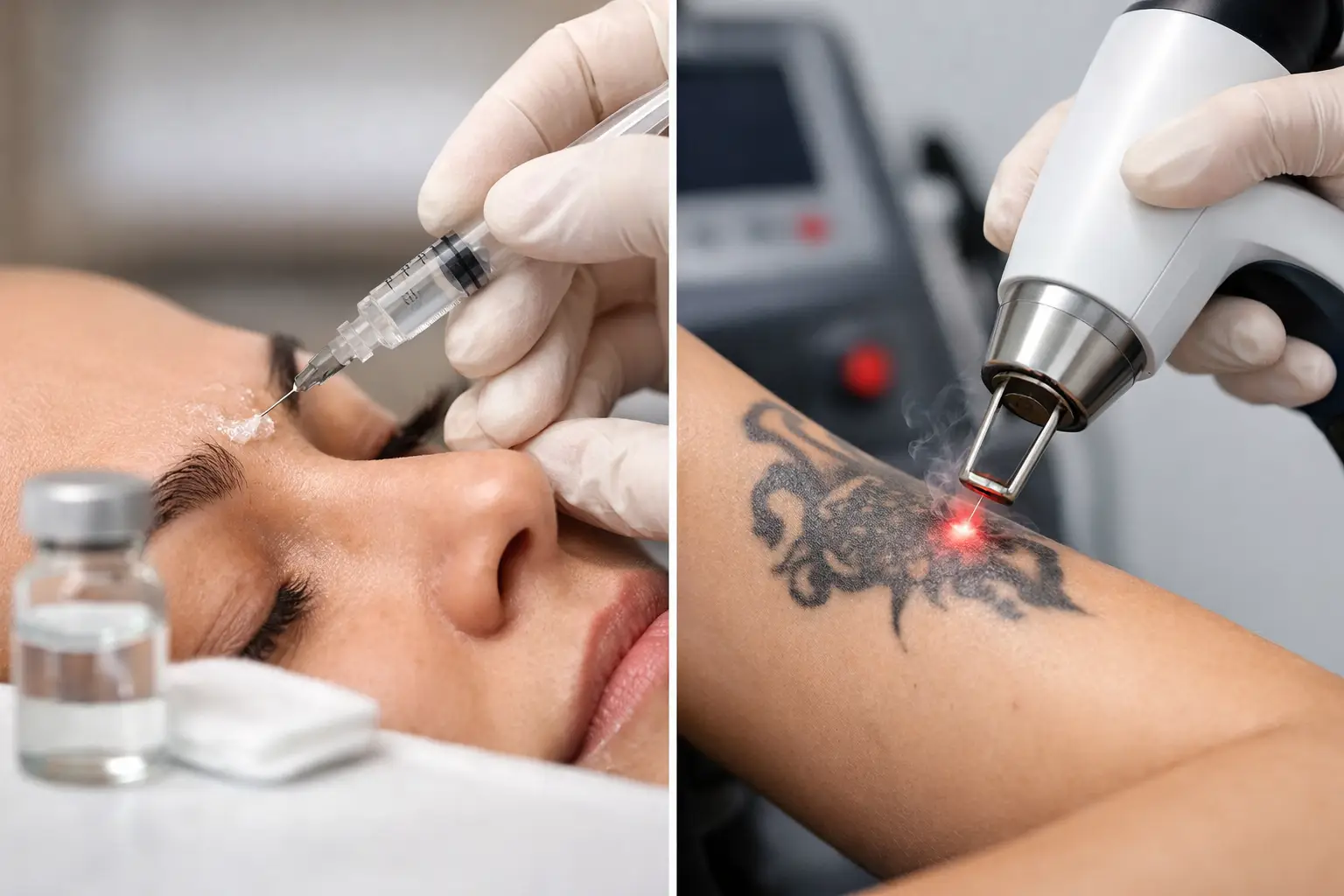
Saline Removal Versus Laser Removal Compared
A cosmetic tattoo that no longer suits your face can feel more noticeable than the treatment ever did. Whether the concern is an old microbladed brow, eyeliner that has softened unevenly, or lip colour with an unwanted tone, saline removal versus laser removal is one of the first decisions to make. The best choice depends on the pigment, placement, age of the tattoo, your skin and the result you want to achieve.
Removal is rarely a one-treatment solution, and a careful plan matters just as much as the technique itself. The goal may be complete removal, a lighter base for a fresh set of brows, or targeted correction of a small area. A professional consultation helps set realistic expectations before treatment begins.
Saline Removal Versus Laser Removal: The Key Difference
Saline removal is a manual cosmetic tattoo removal method. A trained technician uses a tattooing device to place a specialised saline solution into the area of unwanted pigment. The treatment creates a controlled skin response, and some pigment may be lifted as the area heals and sheds naturally.
Laser removal works differently. It uses focused light energy to break pigment into smaller particles that can then be cleared gradually by the body. The laser setting must be selected with care, based on the pigment colour, depth, skin tone and area being treated.
Neither treatment is automatically better. Saline removal can be a useful option for certain cosmetic tattoo pigments and small corrections, while laser can be highly effective for some darker pigments and larger areas. Your pigment formula is often the deciding factor.
When Saline Removal May Be the Better Option
Saline tattoo removal is commonly considered for cosmetic tattooing, particularly around the brows. It may suit clients who want to fade a small section, soften an uneven tail, address pigment that sits too warm or too grey, or make room for a corrected brow shape.
One advantage is that saline treatment does not rely on pigment absorbing laser light. This can make it a practical consideration for pigments that may react unpredictably under laser, including some cosmetic tattoo inks containing iron oxides or titanium dioxide. These ingredients can occasionally darken or change colour after laser exposure, so an experienced provider will assess this risk before recommending a treatment plan.
Saline removal may also be considered when a client needs early intervention after a cosmetic tattoo procedure. Timing is critical in these situations. Do not attempt to treat a fresh tattoo yourself or use at-home products. The skin barrier is vulnerable, and incorrect aftercare can increase the risk of infection, scarring and poor colour healing.
The trade-off is that saline removal creates a surface wound and requires very disciplined healing. A scab or dry crust can form as part of the process. It must be left alone. Picking, rubbing, applying unapproved creams or exposing the area to sweat and sun can interfere with healing and may affect the final result.
When Laser Removal May Be the Better Option
Laser removal is often chosen for cosmetic tattoos with dark brown, black, charcoal or blue-black pigment. These colours may respond well because they can absorb particular laser wavelengths more effectively. It can be an efficient option when there is significant pigment to fade or when an older tattoo has been placed deeply.
However, permanent makeup is not the same as a body tattoo. Brow, eyeliner and lip pigments can contain mixed colourants, and the visible colour does not always reveal how the pigment will react. A brown brow tattoo may contain red, orange, yellow or white components beneath the surface. Once dark pigment fades, these underlying tones can become more apparent.
For this reason, a test spot is often a sensible first step before treating the full area. It provides useful information about how your individual pigment responds and whether there is any colour shift. A gradual, informed approach protects both the skin and your options for future correction.
Laser treatment may also require a series of appointments spaced several weeks apart. This gives the skin time to settle and allows the body to process fragmented pigment. Trying to rush the process can compromise skin recovery, especially on delicate facial areas.
Healing, Comfort and Aftercare
Both saline and laser removal involve downtime, but the healing experience is different. With saline removal, expect the treated area to appear red and tender initially, followed by a dry crust or scab during healing. The final faded result cannot be judged until the skin has fully recovered.
Laser-treated skin can feel warm and sensitive after the appointment. Temporary redness, swelling, frosting of the pigment or darkening may occur, depending on the treatment and pigment. Some clients experience minor scabbing, while others do not. Your provider will give aftercare based on the specific area and response.
For either method, keep the area clean, avoid touching it unnecessarily and follow the exact aftercare instructions provided. Avoid swimming, saunas, intense exercise, direct sun exposure and active skincare products around the treatment area until advised otherwise. Daily sun protection after healing is particularly valuable, as UV exposure can affect both skin tone and remaining pigment.
The most common mistake is judging the result too early. Skin needs time to repair, settle and reveal the true level of fading. Booking another treatment before the area is ready can place unnecessary stress on the skin.
Pigment Type Changes the Plan
There is no one-size-fits-all removal pathway because cosmetic tattoo pigment is complex. Older microblading may have faded into a soft red, orange or grey shadow. Machine brows can be more saturated or sit at a different depth. Eyeliner and lip blush require even more care because of their placement and the sensitivity of the surrounding skin.
An assessment should look at the current colour, how long the tattoo has been in place, whether it was microbladed or machine-applied, previous removal attempts and your desired outcome. Photos of the tattoo when it was fresh can also be helpful, although they are not essential.
Clients seeking new cosmetic tattoo brows do not always need complete removal first. Sometimes strategic lightening is enough to create a cleaner canvas and prevent old pigment from affecting the colour or shape of the new work. This is especially relevant where the previous brow sits outside the ideal placement for your facial structure.
At Ibeauty Medispa, the focus is on creating a tailored pathway rather than treating every old tattoo the same way. Precision matters at every stage, from fading unwanted pigment to planning brows that look balanced, soft and natural.
Safety and Suitability Come First
Removal treatments should only be performed after a proper review of your skin and cosmetic tattoo history. Be open about allergies, skin conditions, medications, previous procedures, immune concerns, pregnancy or breastfeeding, and any history of keloid scarring. These factors may affect treatment timing or suitability.
A qualified practitioner should also explain potential risks clearly. With either method, there can be temporary redness, swelling, uneven fading, colour changes, incomplete removal and, less commonly, scarring or infection. A careful technique and consistent aftercare reduce avoidable risks, but no removal treatment can guarantee a completely invisible result.
Be cautious of promises of instant removal or dramatic results in one appointment. A polished outcome is built through measured treatment, sufficient healing time and honest assessment. Quality over quantity is particularly relevant when working with the face.
Choosing the Right Removal Pathway
If your unwanted tattoo is a small correction, has unpredictable cosmetic pigment, or needs a more targeted approach, saline removal may be worth considering. If the tattoo is dark, heavily saturated and known to respond well to laser, laser treatment may offer a stronger fading option. In some cases, a treatment plan can involve more than one method, used at different stages and only when clinically appropriate.
The right question is not simply which option removes pigment faster. Ask which approach gives your skin, your pigment and your future brow or cosmetic tattoo result the best chance of looking refined. With expert assessment, patience and correct aftercare, you can move forward with a clearer plan and greater confidence in the face you see in the mirror.