
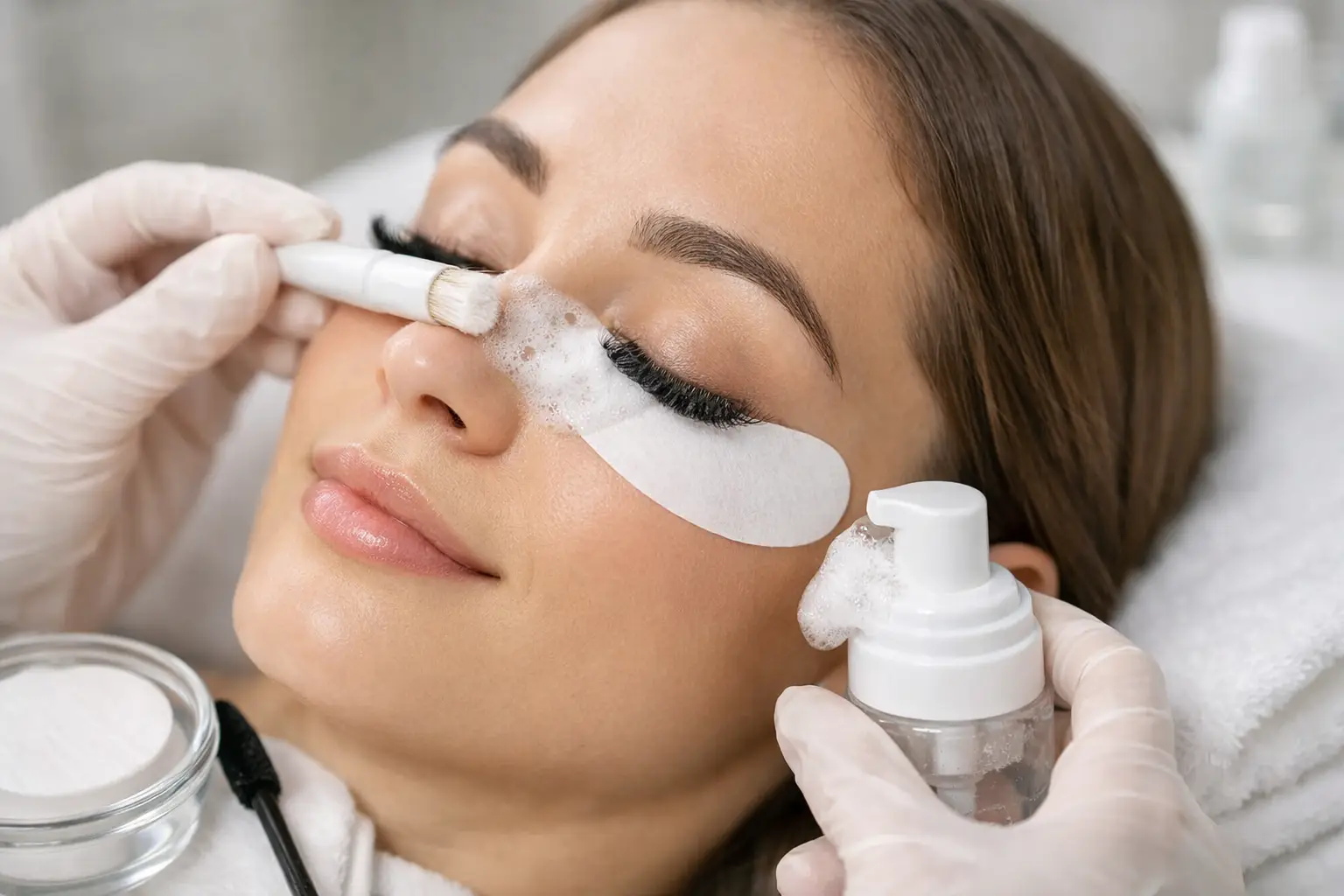
How to Clean Eyelash Extensions the Right Way
Fresh lash extensions should look soft, clean and perfectly separated – not shiny at the base, stuck together or weighed down by makeup. Knowing how to clean eyelash extensions properly is one of the simplest ways to protect your investment, maintain a polished finish and help your infills last beautifully.
A clean lash line supports both lash retention and eye comfort. Natural lashes shed as part of their normal growth cycle, and oil, sweat, skincare and makeup can collect around the extension bond. Without regular cleansing, that build-up can affect the look of your lashes long before your next appointment.
Why cleaning eyelash extensions matters
Eyelash extensions are attached to your natural lashes, not your skin. The adhesive bond is strong when cared for correctly, but it can be compromised by oils, residue, rubbing and overly harsh products. More importantly, a neglected lash line can trap debris around the follicles, leaving lashes looking clumpy and eyes feeling irritated.
Daily cleansing removes the things that naturally accumulate through the day: facial oils, sunscreen, foundation, eyeshadow, perspiration and environmental dust. It also helps extensions fan out properly after sleep, rather than twisting together at the base.
Clean lashes make a difference at your refill appointment too. When your lash artist can clearly see the natural lash and the existing extension, they can work with greater precision. Quality retention starts with professional application, but your home aftercare plays a major part in how your set wears between infills.
When to start cleaning a new set
Follow the aftercare instructions provided by your lash artist first, as adhesive systems and application methods can vary. In most cases, avoiding direct water, steam and cleansing around the eyes for the initial 24 hours is advised so the adhesive can cure correctly. Some artists may recommend a longer period.
Once that initial window has passed, do not wait until your lashes look dirty to cleanse them. A gentle daily routine is better than occasional heavy cleaning. If you wear eye makeup, work out regularly, have oily skin or use richer skincare products, take extra care to cleanse the lash line thoroughly each evening.
What to use to clean eyelash extensions
The best choice is a professional eyelash extension cleanser or lash foam designed to be gentle around the eyes and safe for extensions. Use it with a clean, soft lash cleansing brush. The fine bristles are designed to reach the lash line without pulling on individual extensions.
You will also need clean lukewarm water, a lint-free towel or tissue for gentle blotting, and a clean spoolie brush for brushing the lashes once dry. Keep your spoolie clean and replace it regularly. A spoolie that lives loose in a makeup bag can collect dust, powder and bacteria.
Be selective with products marketed as “oil-free”. While avoiding oils is sensible, not every oil-free cleanser is suitable for lash extensions. Some formulas contain strong surfactants, alcohols or exfoliating ingredients that may irritate the eye area or leave residue behind. A purpose-made lash cleanser is the most reliable option.
Avoid cleansing balms, cleansing oils, petroleum-based products, cream cleansers and makeup wipes around the lash line. Waterproof mascara and waterproof eyeliner are also best avoided because removing them usually requires rubbing or an oil-based remover. Extensions deliver the definition, so mascara should rarely be necessary.
How to clean eyelash extensions step by step
Set aside a minute at the end of the day, ideally before you become too tired to do it properly. Clean hands are essential, so begin by washing and drying them thoroughly.
Remove face makeup carefully
Clean your complexion first, keeping oils and rich products away from the eye area. If you wear eyeshadow or liner, use a lash-safe cleanser on a small cotton-free applicator or your cleansing brush. Work gently above and below the lashes rather than dragging product across the extensions.
Do not use cotton pads, cotton buds or towels directly through the lash extensions. Fine fibres can catch in the lash line and encourage picking, which is one of the quickest ways to damage both extensions and natural lashes.
Clean the lash line, not just the tips
Apply a small amount of lash cleanser to your closed eyelid or directly onto a damp cleansing brush, according to the product instructions. With your eyes closed, use light downward strokes from the upper lid towards the lash tips. Then gently sweep along the lash line where makeup, oil and debris are most likely to sit.
There is no need to scrub. Think controlled, feather-light movements rather than circular rubbing. Give extra attention to the inner and outer corners, where sleep, eyeliner and skincare can build up. Clean underneath the lashes too, using a gentle upward motion while keeping your eye closed.
Rinse completely
Rinse with lukewarm water until no cleanser remains. A clean, damp cotton-free cloth can help remove foam from the surrounding skin, but avoid pressing or wiping the extensions. Product residue can make lashes feel stiff or cause them to stick together, so a complete rinse matters.
Pat the eye area dry with a lint-free towel or allow the lashes to air dry. Never rub your eyes dry. Once the extensions are fully dry, brush them lightly from the middle of the lashes through to the tips with a clean spoolie. Avoid pushing the spoolie hard into the base of the lashes.
A routine that protects your lash retention
For most clients, cleansing once each day is ideal. Night-time works well because it removes the day’s makeup, oil and pollution before they sit around the lash line overnight. A quick morning rinse and brush can be helpful if you have slept face-down, exercised early or noticed your lashes have become tangled.
The products around your eyes matter as much as the cleanser itself. Apply eye cream, facial oil and rich moisturiser sparingly, keeping them below the orbital bone where possible. If product migrates up towards your lashes, it may affect retention and leave a glossy film at the base.
Try to sleep on your back or side where practical. Pressing your lashes into a pillow can cause them to bend, twist or shed early. A silk or satin pillowcase may reduce friction, but it does not replace careful positioning and proper daily cleansing.
Heat requires common sense too. Normal showers are fine after the initial cure period, but prolonged high heat from saunas, steam rooms or very hot showers can affect the shape and bond of extensions over time. If your lashes get wet, gently dry and brush them rather than leaving them damp and tangled.
Common mistakes that make extensions look untidy
The most common mistake is skipping cleansing because you are worried water will make extensions fall out. Once the recommended curing period is over, clean lashes are healthier and often retain better than lashes coated in oil and debris.
Picking at loose extensions is another issue. A lash that has grown out can feel tempting to pull, but it is still attached to a natural lash. Pulling can remove or weaken that natural lash prematurely. Leave grown-out extensions for your refill appointment, where they can be removed safely and replaced with precision.
Over-brushing is less obvious but equally unhelpful. Brushing is for tidying, not detangling forcefully. If lashes are consistently catching, crossing over or becoming uncomfortable, book an assessment rather than trying to fix the set at home.
Finally, avoid trying to remove eyelash extensions yourself with remover, oils or steam. Professional removal protects your natural lashes and gives your lash artist the opportunity to assess their condition before your next set.
When to contact your lash artist
A little natural shedding between appointments is completely normal. However, persistent redness, swelling, itching, pain, discharge or a sudden reaction around the eyes is not something to ignore. Stop using any new product that may be causing irritation and seek appropriate medical advice if symptoms are significant or ongoing.
If your extensions are falling out in clusters, feel unusually heavy or are uncomfortable when blinking, contact your lash artist promptly. The answer may be a simple aftercare adjustment, an earlier infill or professional removal. Your eye health always comes before keeping a set of lashes on.
At Ibeauty Medispa, we believe beautiful lashes should feel as good as they look. A gentle daily cleanse, thoughtful product choices and regular professional infills will help keep your extensions clean, comfortable and confidently polished.