
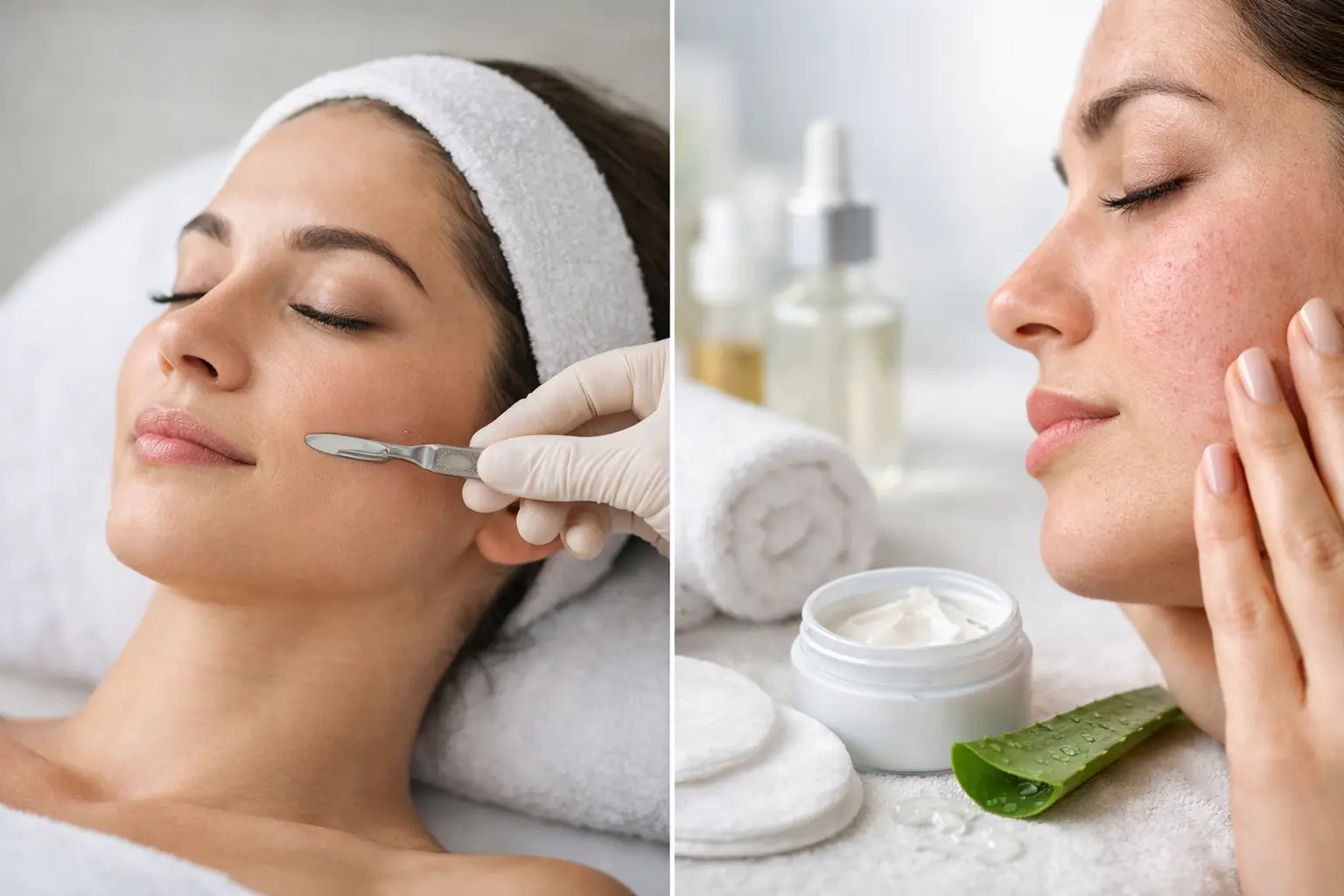
Dermaplaning Facial Side Effects and Aftercare
Freshly dermaplaned skin can look instantly smoother, brighter and more polished – exactly why this treatment remains a favourite before an event or as part of a regular facial plan. However, understanding dermaplaning facial side effects is the key to getting that refined glow without unnecessary irritation. When performed correctly on suitable skin, dermaplaning is generally a low-downtime treatment. Your skin still needs thoughtful preparation and aftercare.
Dermaplaning uses a sterile, professional blade to gently remove the outer layer of dead skin cells along with fine vellus hair, often called peach fuzz. This creates a soft, even surface that can help makeup sit beautifully and leave the complexion looking more luminous. It is a precise exfoliation treatment, not a shaving service, and the condition of your skin on the day matters.
Common dermaplaning facial side effects
Most side effects after dermaplaning are mild, temporary and linked to exfoliation. It is normal for skin to feel a little more exposed than usual because the surface build-up that can make the complexion appear dull has been removed.
Temporary redness and warmth
A light pink flush, warmth or mild sensitivity can appear immediately after treatment. For many clients, this settles within a few hours. Those with naturally reactive skin, rosacea-prone skin or a compromised skin barrier may remain red for longer.
This is one reason an experienced therapist will assess your skin before beginning. A treatment that suits your friend, colleague or favourite beauty influencer may need to be adjusted for your skin type, current routine and concerns.
Tightness, dryness or light flaking
Dermaplaning removes dead surface cells, but it can also leave dry or dehydrated skin feeling temporarily tight. Light flaking may occur over the following days, particularly if your skin was already dry or you use active skincare at home.
This does not mean you need to scrub the skin again. Keep your routine calm, hydrating and simple. A gentle cleanser, soothing moisturiser and daily SPF are usually far more helpful than adding more exfoliation.
Increased sensitivity to products and sun
After any exfoliating facial, skin can be more sensitive to ingredients it normally tolerates. Fragranced products, strong acids, retinoids and abrasive scrubs may sting or cause redness during the first few days after dermaplaning.
Sun protection is equally essential. Freshly exfoliated skin is more vulnerable to sun exposure and pigmentation concerns, especially in the Australian climate. Apply a broad-spectrum SPF 50+ every morning and reapply when you are outdoors. A hat and shade are smart additions, particularly after a treatment close to a beach day, outdoor event or long commute.
Tiny nicks or pinpoint bleeding
In skilled hands, nicks are uncommon, but they can happen. Areas with active pimples, uneven texture, raised lesions or very dry patches are more likely to catch on the blade. Small nicks should be managed with clean, gentle aftercare and usually settle quickly.
Avoid picking at the area or applying harsh antiseptics and active products unless advised by a qualified health professional. If bleeding does not stop, pain increases or the area appears infected, seek medical advice.
Breakouts and congestion
Some clients notice a few small pimples after a facial and assume the treatment has caused an acne flare-up. In reality, several factors may be involved: touching the face, applying heavy makeup too soon, sweating after the appointment, using occlusive products, or treating over pre-existing congestion.
Dermaplaning is not always the best choice for active, inflamed acne. Passing a blade over sore, pustular breakouts can spread bacteria, aggravate inflammation and increase discomfort. If acne is your main concern, a tailored acne facial or another professional skin treatment may be the better pathway.
What should not be ignored after dermaplaning
A little pinkness is expected. Persistent burning, swelling, a widespread rash, hives, increasing tenderness, weeping skin or yellow crusting are not standard dermaplaning facial side effects. These signs can indicate an irritation, allergic reaction or infection and deserve prompt professional advice.
Contact the clinic that performed your treatment first so they understand what was used on your skin. If symptoms are severe, spreading or accompanied by facial swelling or breathing difficulty, seek urgent medical care. Beauty treatments should always support your confidence, never leave you worried about your wellbeing.
Who should postpone dermaplaning?
A quality dermaplaning treatment begins before the blade touches your skin. Be open about your skincare, medications, allergies and any recent procedures so your therapist can make the safest recommendation.
It is generally best to postpone dermaplaning if you have active acne, cold sores, eczema flare-ups, sunburn, broken skin, a rash or an active skin infection. Recent waxing, chemical peels, laser treatments, injectable treatments or strong resurfacing procedures may also mean your skin needs more recovery time.
Prescription acne medication and products containing retinoids, exfoliating acids or benzoyl peroxide require special consideration. Do not simply stop prescribed medication without speaking to the practitioner who prescribed it. Your therapist can advise on the appropriate treatment timing, but medical advice should come from your doctor or dermatologist where needed.
Pregnancy can also change skin sensitivity and pigmentation tendencies. Dermaplaning itself may suit some pregnant clients, but the full facial plan, including any added products or treatments, should be chosen carefully.
Aftercare that protects your results
The first 24 to 48 hours set the tone for your recovery. Treat your skin as freshly polished rather than invincible. Keep hands away from your face and avoid testing new products just because your complexion feels exceptionally smooth.
For the next few days, cleanse with lukewarm water and a gentle cleanser, then use a nourishing moisturiser to support the skin barrier. Wear SPF 50+ daily. If you need makeup, choose clean brushes and avoid heavy, pore-clogging formulas where possible, especially if you are prone to breakouts.
Pause retinol, retinoids, AHAs, BHAs, enzyme exfoliants, physical scrubs and at-home peels until your skin feels fully settled. The exact timing depends on your skin and the strength of the products, but many clients benefit from a short break of several days. It is also wise to avoid hot yoga, saunas, steam rooms, chlorinated pools and intense exercise for the first day if you are feeling warm or sensitive.
Do not book facial waxing immediately after dermaplaning. Both treatments exfoliate the skin in different ways, and combining them too closely can cause unnecessary lifting and irritation. A professional can help you schedule brow, facial hair removal and skincare appointments in the right order.
Does dermaplaning make facial hair grow back thicker?
No. Dermaplaning does not change the number of hair follicles, hair growth rate, colour or thickness. The fine hair may feel a little different as it grows through because it has been cut with a blunt edge, but it has not become darker or coarser.
This myth can stop clients from trying a treatment that may genuinely suit their skin goals. The more relevant question is whether your skin is calm and healthy enough for manual exfoliation at that particular time.
Choosing a professional dermaplaning treatment
The safest results come from clean technique, sterile equipment, a considered consultation and a therapist who knows when not to treat. Dermaplaning is not about removing as much as possible. It is about controlled, even exfoliation that respects the skin barrier.
At Ibeauty Medispa, dermaplaning can be tailored as part of a professional facial approach, with your skin condition, lifestyle and desired results considered before treatment. Whether you are preparing for a special occasion or working towards a smoother complexion over time, quality over quantity always delivers the most flattering result.
If your skin is feeling sensitised, do not push through another exfoliating treatment to chase a faster glow. Give it recovery time, protect it from the sun and book a professional consultation when you are ready for advice designed around your complexion.