
How Long Does Eyebrow Tattoo Last? The Real Timeline
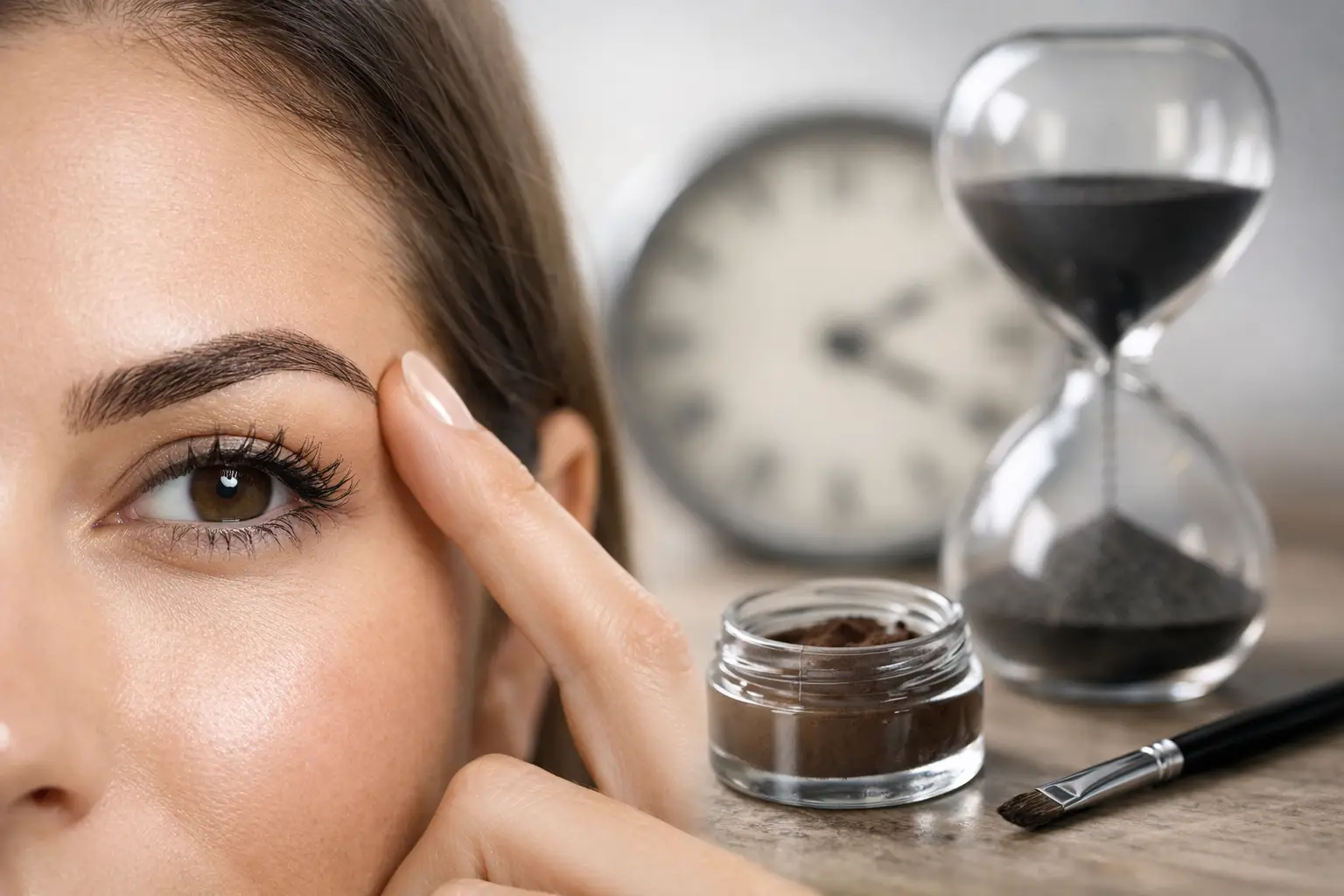
A beautifully shaped eyebrow tattoo can make getting ready feel far simpler. It gives sparse, uneven or over-plucked brows a polished frame from the moment you wake up. But how long does eyebrow tattoo last? For most clients, cosmetic tattoo eyebrows remain visible for around one to three years before a colour boost is needed, although the result gradually softens rather than disappearing overnight.
The exact timeline depends on your skin, lifestyle, chosen technique and aftercare. This is why a professional consultation matters just as much as the tattoo appointment itself. The goal is not simply to create brows that look good on day one, but to choose a shape, shade and finish that age beautifully with your skin.
How long does an eyebrow tattoo last on average?
Unlike a traditional body tattoo, cosmetic eyebrow tattooing is designed to fade over time. The pigment is placed more superficially in the skin and is selected to heal into a soft, natural-looking brow colour. In most cases, clients can expect their eyebrow tattoo to last between 12 and 36 months.
A hair-stroke or microblading-style result often lasts around 12 to 18 months. Soft powder brows and ombré brows can last closer to two to three years, particularly on normal to dry skin. Combination brows, which blend fine hairstrokes with gentle shading, usually sit somewhere in between.
These ranges are guides, not guarantees. Two clients can receive the same treatment and have very different pigment retention. One may notice fading at 12 months, while another still has a clear, balanced result well into the second or third year.
The first appointment is not the finished result
Cosmetic tattooing is typically completed in two stages. Your initial appointment creates the shape and lays down the pigment, then a perfecting session is booked after the area has healed. This touch-up is usually performed around six to eight weeks later and is essential for refining patchy areas, adjusting colour and improving pigment retention.
During healing, brows can look darker and sharper than expected for the first week. As the skin repairs itself, the colour may appear to fade dramatically before settling back through the skin. This is normal. Your final healed colour should be softer than the fresh tattoo, which is exactly what creates a refined, natural finish.
What affects how long eyebrow tattoo lasts?
Skin type is one of the strongest influences. Oily skin tends to push pigment out faster and can cause crisp hairstrokes to soften or blur earlier. For this reason, powder or shaded techniques are often a better long-term choice for clients with very oily skin. Dry or balanced skin commonly retains pigment more evenly and may hold fine detail for longer.
Sun exposure also makes a noticeable difference. Australian sunshine is harsh, and UV exposure can fade cosmetic tattoo pigment just as it fades fabrics and hair colour. Regular sunscreen around the brow area, once the tattoo has fully healed, helps protect the colour and keeps the tone looking fresher for longer.
Your skincare routine matters too. Active ingredients such as retinol, retinal, AHAs, BHAs, glycolic acid and prescription acne products increase skin cell turnover. When used close to the brows, they can speed up fading. Chemical peels, microdermabrasion, dermaplaning and laser treatments should also be kept away from the tattooed area unless your beauty professional advises otherwise.
Other factors include metabolism, age, immune response, hormonal changes, medications and how often you exfoliate. There is no fault in faster fading. It simply means your brows may benefit from maintenance sooner.
Which eyebrow tattoo technique lasts the longest?
Shading-based styles usually offer the longest-lasting visible result. Powder brows create a softly filled, makeup-like effect that can be tailored from barely there to more defined. Ombré brows place a lighter effect at the front of the brow and a more concentrated finish through the arch and tail, giving structure without a harsh block shape.
Microblading uses fine strokes to mimic natural brow hairs. It can look exceptionally realistic on suitable skin, especially when the client has dry to normal skin and wants to fill small gaps rather than create a fully made-up brow. However, because each stroke is delicate, it may not remain as crisp for as long as a shaded technique.
Combination brows are an excellent option when you want the realism of hairstrokes with the extra longevity and definition of soft shading. The right method should be based on your natural brow hair, skin condition, preferred daily look and how much maintenance you are comfortable with. Quality over quantity is the rule here: a technique that suits your skin will usually give you a more beautiful result over time.
When should you book an eyebrow tattoo colour boost?
A colour boost is usually recommended every 12 to 24 months. It refreshes faded pigment, restores definition and allows the shape to be reviewed as your preferences and facial features change. Waiting until the tattoo has faded completely can make the appointment more like a new procedure, so it is better to maintain your brows while there is still a visible guide in the skin.
You may be ready for a refresh when your brow tails start to look faint, your colour has become warmer or ashier than you prefer, or you find yourself regularly filling in areas with pencil again. A colour boost is also a good opportunity to make small, considered changes. Perhaps you now prefer a softer front, a slightly fuller arch or a shade that better suits your current hair colour.
Avoid booking a touch-up simply because you see minor lightness after healing. Cosmetic brows are meant to soften. The aim is elegant definition, not a dense or overly saturated tattoo. An experienced artist will assess what your brows actually need and advise whether a refresh is appropriate.
Aftercare that protects your results
The healing period has a major effect on retention. For roughly the first seven to 10 days, keep the brow area clean, dry and protected according to your artist’s personalised aftercare instructions. Do not pick, scratch or pull at flakes or scabs, even if the area feels itchy. Removing healing skin early can lift pigment with it and leave uneven patches.
You should also avoid sweating heavily, swimming, saunas, steam rooms and direct sun while the brows are healing. Keep makeup, skincare actives and facial products away from the treated area unless they have been approved for use. Your appointment artist will let you know when you can return to your normal routine.
Once healed, use sunscreen daily and apply active skincare carefully around, rather than directly over, the brows. If you book facial treatments, waxing or skin resurfacing, tell your therapist that you have cosmetic tattooed eyebrows. Small adjustments to the treatment area can help preserve your investment.
Is eyebrow tattooing really permanent?
Cosmetic eyebrow tattooing is often called semi-permanent because it fades, but it should still be treated as a long-term decision. Pigment can remain in the skin for years, even after it has become very light. This is why precise brow mapping, thoughtful colour selection and a conservative approach matter.
At Ibeauty Medispa, the focus is on creating brows that complement your face, natural hair pattern and everyday style rather than chasing a short-lived trend. A well-designed brow tattoo should give you freedom from daily filling and shaping while still looking like you.
The best time to refresh your brows is when they no longer give you the effortless definition you loved after healing. Keep them protected, choose a technique that suits your skin, and allow a skilled artist to guide the maintenance plan. Your perfect eyebrows should feel easy, polished and confidently yours.