
Lip Colour Tattoo Healing Stages Explained
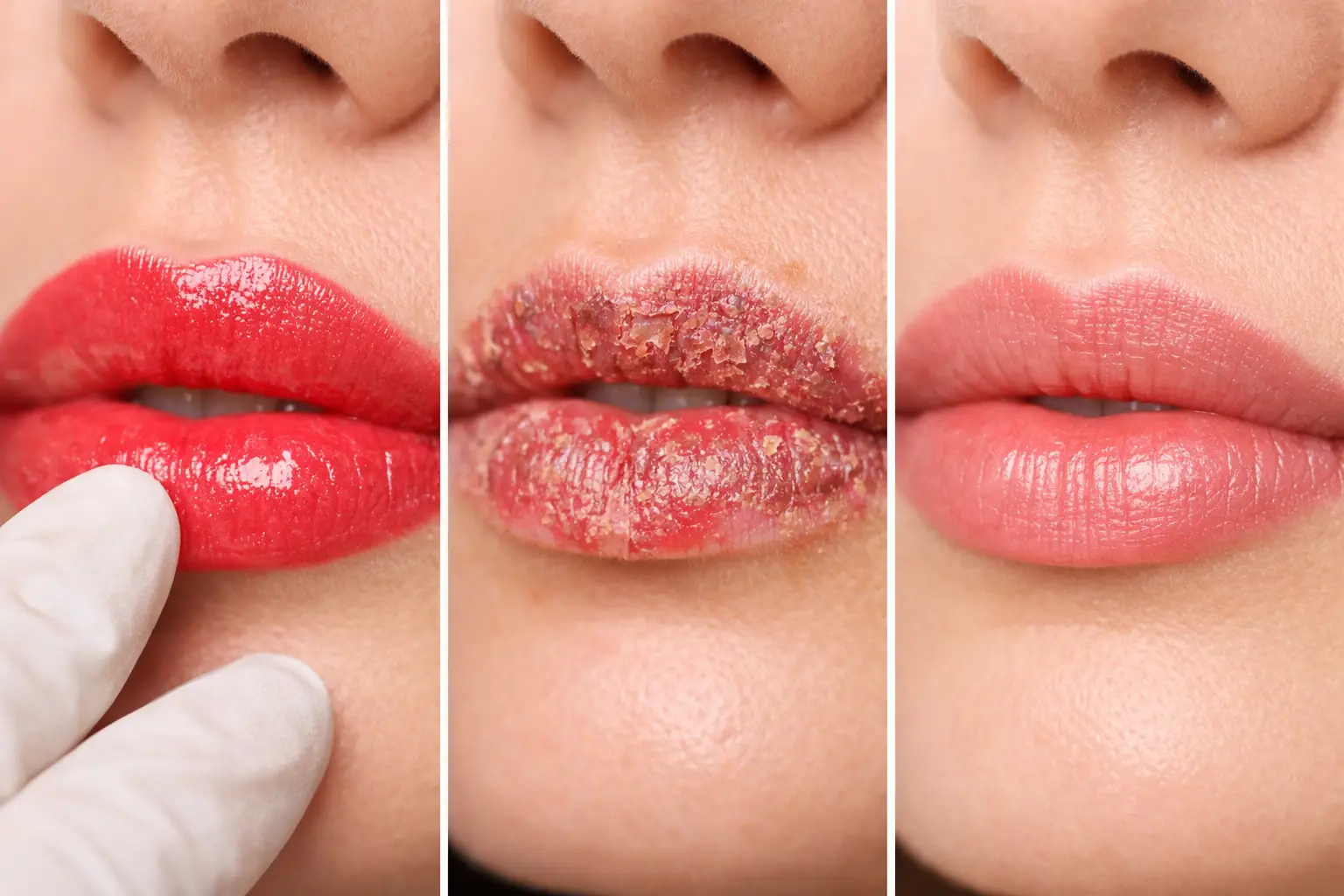
Your new lip tattoo may look brighter, darker and more defined than you expected when you first leave your appointment. That is normal. The lip colour tattoo healing stages are a gradual process, and the fresh result is not the final result. As the lips settle, peel and regenerate, the colour will soften into a more natural-looking tint designed to enhance your own lip shape and tone.
A quality lip colour tattoo is all about precision, balanced pigment selection and a beautifully healed finish. Knowing what to expect helps you protect that investment, avoid picking or over-treating the area, and feel confident while your colour develops.
Lip Colour Tattoo Healing Stages: A Day-by-Day Guide
Every client heals at a slightly different pace. Your skin type, natural lip tone, lifestyle, pigment selection and how closely you follow aftercare all influence the process. In most cases, the obvious healing period lasts around seven to 10 days, while the true colour continues to settle over the following weeks.
Days 1-2: Bright, swollen and freshly defined
Immediately after treatment, lips can appear bold, vibrant and a little fuller due to mild swelling. The outline may look stronger than the soft, natural enhancement you chose at consultation. This fresh colour is a combination of pigment, temporary inflammation and the skin’s natural response to treatment.
Mild tenderness, tightness and dryness are common during this stage. The swelling usually settles quickly, often within 24 to 48 hours. Keep your lips clean, avoid touching them unnecessarily, and apply the recommended aftercare balm in a very thin layer if advised by your artist. Too much product can make the area overly moist and interfere with healthy healing.
For the first couple of days, take extra care with hot drinks, spicy foods and anything likely to rub against the lips. Use a straw where practical and gently pat the area dry after drinking. Avoid kissing, swimming, saunas, steam rooms and strenuous exercise that leaves you heavily perspiring.
Days 3-5: Dryness and flaking begin
This is the stage that can test your patience. The surface of the lips may feel dry and begin to flake or peel in small sections. The pigment can also look patchy, darker around the edges or uneven as the superficial skin sheds.
Do not pick, scrub or pull at peeling skin. Even a small amount of picking can lift pigment unevenly, create unnecessary irritation and affect the healed colour. Let the flakes come away naturally. This is one of the most important parts of lip tattoo aftercare.
The lips may look less polished than they did on day one, but that does not mean anything has gone wrong. It is simply a temporary phase between the fresh colour and the soft healed result.
Days 5-10: The colour appears to fade
Once most of the flaking has finished, many clients are surprised to see their lip colour tattoo look much lighter. Sometimes it can seem as though the pigment has almost disappeared. This is often called the ghosting phase, and it is a normal part of healing.
New skin forms over the implanted pigment, creating a pale or muted appearance. The colour is still there, but it needs time to reappear as the skin continues to regenerate. Resist the urge to judge your result too early or compare it with the fresh treatment photos.
Continue to protect your lips from direct sun exposure. Once the area is fully closed and healed, a lip product with SPF can help reduce premature fading. Sun exposure is one of the main reasons cosmetic tattoo colour can lose its freshness sooner than expected.
Weeks 2-4: Colour returns and settles
Over the next few weeks, the pigment starts to bloom through the skin and settle into a softer, more even shade. The final colour generally appears less intense than it did immediately after your appointment. That is exactly the goal for most lip blush and lip colour tattoo treatments: a refined wash of colour that makes lips look healthier, more balanced and naturally defined.
You may notice that certain areas retain colour more strongly than others. Lips are delicate, highly mobile and affected by hydration, natural texture and previous sun exposure. Slight variations during healing are common, which is why a perfection appointment is usually recommended after the initial treatment has fully settled.
Weeks 6-8: Review and perfection appointment
By six to eight weeks, your artist can properly assess pigment retention, shape and colour balance. A perfection appointment allows for adjustments where needed, such as adding depth to a lighter area, refining symmetry or building a little more colour saturation.
Some clients heal with excellent retention after one session, while others need more pigment layering to achieve their preferred result. This is not a reflection of the quality of the treatment. Natural lip tone, previous cosmetic tattooing, smoking, sun exposure, skin metabolism and aftercare can all influence retention.
What Is Normal During Lip Tattoo Healing?
A little swelling, dryness, flaking, tightness and temporary unevenness are all expected within the lip colour tattoo healing stages. Your lips should become progressively more comfortable as the first week passes, even though the colour itself can look unpredictable for a short time.
It is also normal for the healed shade to look softer than the colour chosen on the day. Lip pigments are selected with healing in mind, not just for how they appear fresh. A skilled cosmetic tattoo artist considers your natural lip colour and undertone to create a result that suits your complexion rather than sitting harshly on the face.
If you have a history of cold sores, let your technician know before booking. Lip tattooing can trigger an outbreak in susceptible clients, and your medical practitioner may advise preventative antiviral medication. This needs to be organised before your appointment, not after symptoms begin.
When to Contact Your Artist or Seek Medical Advice
Healing should not involve escalating pain, spreading redness, significant heat, pus, fever or severe swelling that does not settle. These are not typical cosmetic tattoo healing symptoms. Contact your artist promptly if you are concerned about your healing, and seek medical advice for signs of infection or an allergic reaction.
Avoid applying products that have not been recommended for your aftercare. Strong skincare actives, exfoliants, fragranced balms and household remedies can irritate freshly treated lips. The simple approach is usually the best one: clean hands, minimal approved aftercare and time.
How to Help Your Lip Colour Heal Evenly
For a polished, long-lasting result, protect the lips while they heal. Avoid lipstick, gloss and lip liner until the skin has finished peeling and feels fully healed. Keep your water intake up, but do not constantly wet the lips, as excess moisture can soften the healing skin.
Plan your treatment around your calendar where possible. It is best not to book immediately before a beach holiday, major event or long weekend involving swimming and sun exposure. You can still go about your normal routine, but allowing yourself a quieter few days makes aftercare much easier.
Longer term, hydration and sun protection make a visible difference to how fresh your colour stays. Cosmetic tattooing is semi-permanent, not permanent, and maintenance appointments are part of keeping the result soft, even and beautifully defined.
At Ibeauty Medispa, lip colour tattooing is approached with the same care given to every precision cosmetic tattoo service: a considered shape, a flattering colour and aftercare that supports your best healed result. Be gentle with your lips during the healing window, then give the colour time to reveal its true finish.