
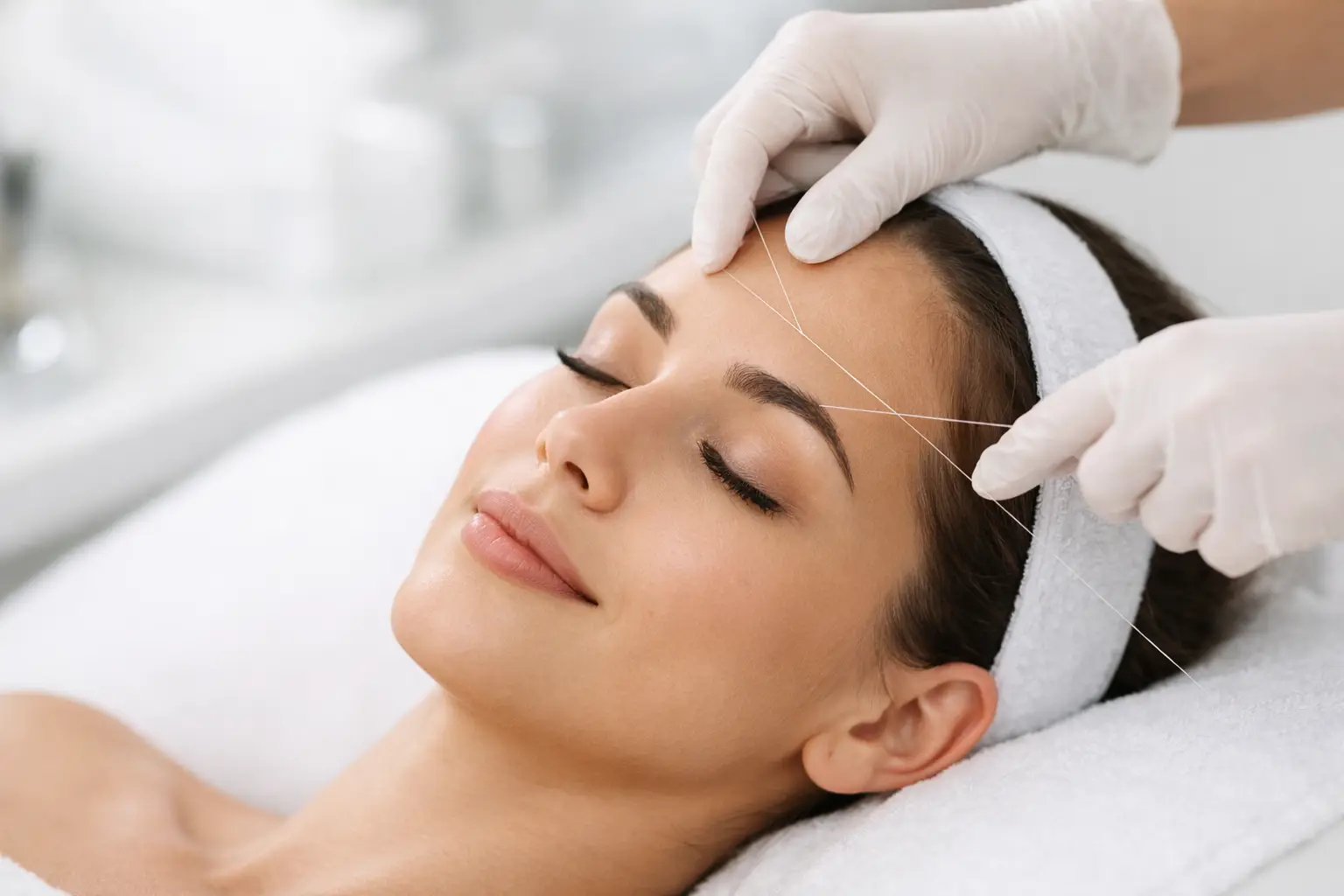
Facial Threading: Is It Right for You?
A clean brow line can change your whole face. So can the removal of soft facial hair around the upper lip, chin or sides of the face. That is why facial threading remains a go-to treatment for clients who want sharp definition, smooth skin and precision without the use of heat or harsh chemicals.
For many clients, the appeal is simple. Facial threading is quick, accurate and especially useful in areas where shape matters. If you care about polished brows, neat facial hair removal and a treatment that fits easily into regular beauty maintenance, threading is worth understanding properly before you book.
What is facial threading?
Facial threading is a hair removal technique that uses a twisted cotton thread to lift unwanted hair from the follicle. The therapist rolls the thread across the skin, catching multiple hairs and removing them in a controlled line. It is most commonly used for eyebrow shaping, but it can also be used on the upper lip, chin, cheeks, forehead and sides of the face.
What makes threading different is the level of control. Instead of removing a broad area at once, the therapist can target fine lines of hair with impressive accuracy. That is why it is often preferred for brow shaping, where small changes in arch, tail or thickness can make a visible difference.
Why clients choose facial threading
Precision is the biggest reason threading stays popular. If you want cleaner brow symmetry or a more refined shape, threading allows for detailed work that is harder to achieve with some other methods. It is particularly helpful for removing short, fine hairs that sit close to the brow line and affect the overall finish.
Many clients also choose threading because it does not involve wax, strips or active ingredients. For some skin types, that matters. If you are sensitive to heat, react to certain wax formulas or use skincare that leaves the skin more delicate, threading can be a suitable alternative.
There is also the convenience factor. A threading appointment is usually straightforward, and the regrowth period often feels softer because hair is removed from the root rather than cut at the surface. Over time, regular maintenance can help keep the shape consistent, which means less daily effort with tweezers or brow pencils.
Where facial threading works best
Brows are still the standout area for threading. This is where the method really shows its value, because the treatment can create crisp definition while preserving your preferred brow fullness. Whether you like a strong, sculpted brow or a softer natural finish, threading supports controlled shaping rather than over-removal.
The upper lip is another popular area. Threading can remove fine and medium facial hair neatly without leaving product residue on the skin. Chin and side-of-face threading can also work well, especially for clients who want a cleaner makeup application or a smoother skin surface.
That said, not every facial area suits every client in the same way. Hair texture, skin sensitivity and the amount of hair growth all play a part. Very coarse or dense hair in certain areas may sometimes be better managed with waxing or another removal method, while very reactive skin may need a cautious approach regardless of technique.
Facial threading vs waxing
Clients often ask which option is better. The honest answer is that it depends on your skin, your hair growth and the result you want.
Threading is generally better for precision. It is ideal when the shape matters, especially in the brows. It also avoids heat and does not remove the top layer of skin in the same way waxing can, which may be preferable for clients using exfoliating acids, retinol or acne treatments.
Waxing is often faster for larger areas and may suit clients who want a very quick clean-up across broader sections of facial hair. Some people also find it more familiar. However, waxing can be less exact around detailed brow shaping, and for certain skin types it carries a higher risk of irritation, lifting or redness.
If you have recently had skin treatments such as microdermabrasion, dermaplaning or active resurfacing facials, threading may be the safer option, but timing still matters. Your therapist should always assess the condition of your skin before treatment.
What to expect during your appointment
A professional threading appointment usually begins with a quick consultation. This is where your therapist checks the area, discusses your preferred shape and considers any skin sensitivity, recent treatments or products you have been using at home. That step matters more than many clients realise. Good shaping is not only about hair removal. It is about balancing your features and protecting the skin.
During the treatment, the thread is twisted and moved over the skin in short, repetitive motions. You may feel a quick pinching or tugging sensation, particularly if it is your first time, but most clients find it manageable. Brows and upper lip areas can water slightly because of the nerve sensitivity around the eyes and nose, which is completely normal.
After threading, mild redness is common and usually settles quickly. The skin should feel clean and smooth, with a more defined result straight away. Brow threading in particular gives immediate visual improvement, which is one reason clients keep coming back.
Is facial threading suitable for sensitive skin?
It can be, but sensitive skin is not one-size-fits-all. Some clients do extremely well with threading because there are no waxes or chemicals involved. Others may still experience redness, tenderness or small bumps, especially if the skin barrier is already compromised.
If your skin is prone to irritation, the quality of the treatment becomes even more important. Clean technique, gentle skin support and proper aftercare make a difference. It is also worth mentioning any use of prescription skincare, retinoids, exfoliating acids or recent facial treatments before your appointment.
At a professional clinic, this assessment helps avoid unnecessary reactions. Quality over quantity matters here. A rushed treatment may remove hair, but a considered treatment protects your skin while delivering a cleaner finish.
Aftercare matters more than people think
The first 24 hours after threading are usually simple, but they do matter. Freshly threaded skin can be slightly open and reactive, so it is best to avoid heavy touching, active skincare and anything that adds heat or friction to the area.
That means holding off on strong exfoliants, retinol, intense exercise, saunas and direct sun where possible. If you wear makeup, applying it with clean brushes or a fresh sponge is the safer option. A calming product may help if your skin tends to flush, but keeping the area clean and undisturbed is often enough.
If you are having regular brow maintenance, timing threading appointments around other facial treatments is also smart. Skin that has just been resurfaced, peeled or deeply exfoliated may need a little recovery time before hair removal.
How often should you book facial threading?
Most clients book every two to four weeks, depending on hair growth, the area treated and how polished they like their look. Brows often benefit from consistent maintenance because it helps preserve shape. Waiting too long can make it harder to keep the line clean, especially if your brows grow in different directions or have uneven density.
For upper lip or chin threading, frequency varies more. Some clients prefer a regular schedule, while others book as needed. Your therapist can usually recommend a suitable timeframe after seeing your growth pattern once or twice.
Choosing the right therapist
With facial threading, technique is everything. A skilled therapist does more than remove hair. They read your face shape, understand brow balance and know how to create definition without taking too much away. That is particularly important if you are growing out thin brows, correcting uneven shaping or maintaining a look that needs consistency.
This is why many clients prefer a beauty clinic that understands brows as part of the bigger picture. At Ibeauty Medispa, precision-led grooming sits naturally alongside brow treatments, lashes and advanced skin services, which means your facial threading can be tailored to your wider beauty goals rather than treated as a basic add-on.
When facial threading might not be the best option
There are situations where threading may need to be postponed or replaced with another method. Broken skin, active irritation, sunburn, certain acne flare-ups or recent intensive skin treatments can make the area too sensitive. In these cases, protecting the skin comes first.
Some clients also simply prefer the feel or speed of waxing, especially for broader facial areas. Others love threading for brows but choose a different method for the rest of the face. That does not mean one treatment is better across the board. It means the best result often comes from matching the method to the area, skin condition and maintenance routine.
If you want defined brows, cleaner facial contours and a hair removal method built around control, facial threading is a strong option. The right treatment should leave you looking polished, not overdone, and feeling confident enough to do less, not more, in front of the mirror.