
Acne Facial Treatment Benefits Explained
Breakouts rarely show up at a convenient time. One week your skin feels manageable, and the next you are dealing with congestion, inflamed spots, post-acne marks and makeup that refuses to sit properly. That is why understanding acne facial treatment benefits matters. A well-planned professional facial is not just about feeling pampered – it is about helping problem skin function better, look clearer and respond more consistently over time.
For many clients, acne is not one single issue. It can be excess oil through the T-zone, blocked pores across the cheeks, painful hormonal breakouts along the jawline, or rough texture that lingers long after active blemishes settle. Professional acne facials are designed to treat these concerns in a targeted way, with products and techniques selected for your skin rather than a one-size-fits-all routine.
What are the real acne facial treatment benefits?
The biggest benefit is targeted skin correction. A professional acne facial can deeply cleanse the skin, soften congestion, remove built-up debris and help reduce the conditions that allow breakouts to thrive. This goes beyond what most home routines can achieve, especially when pores are heavily blocked or skin is reactive.
Another key advantage is professional assessment. Acne can look similar on the surface, but not all breakouts should be treated the same way. Some skin needs calming and barrier repair before active products are increased. Other skin types benefit from exfoliation and extractions because congestion is the main issue. Having a trained skin professional adjust the treatment to your current skin condition can make a noticeable difference.
There is also the benefit of consistency. Skin often improves when treatment is not based on guesswork. Instead of constantly switching cleansers, serums and spot treatments, a structured facial plan can help reduce flare-ups and support more stable results.
How an acne facial works
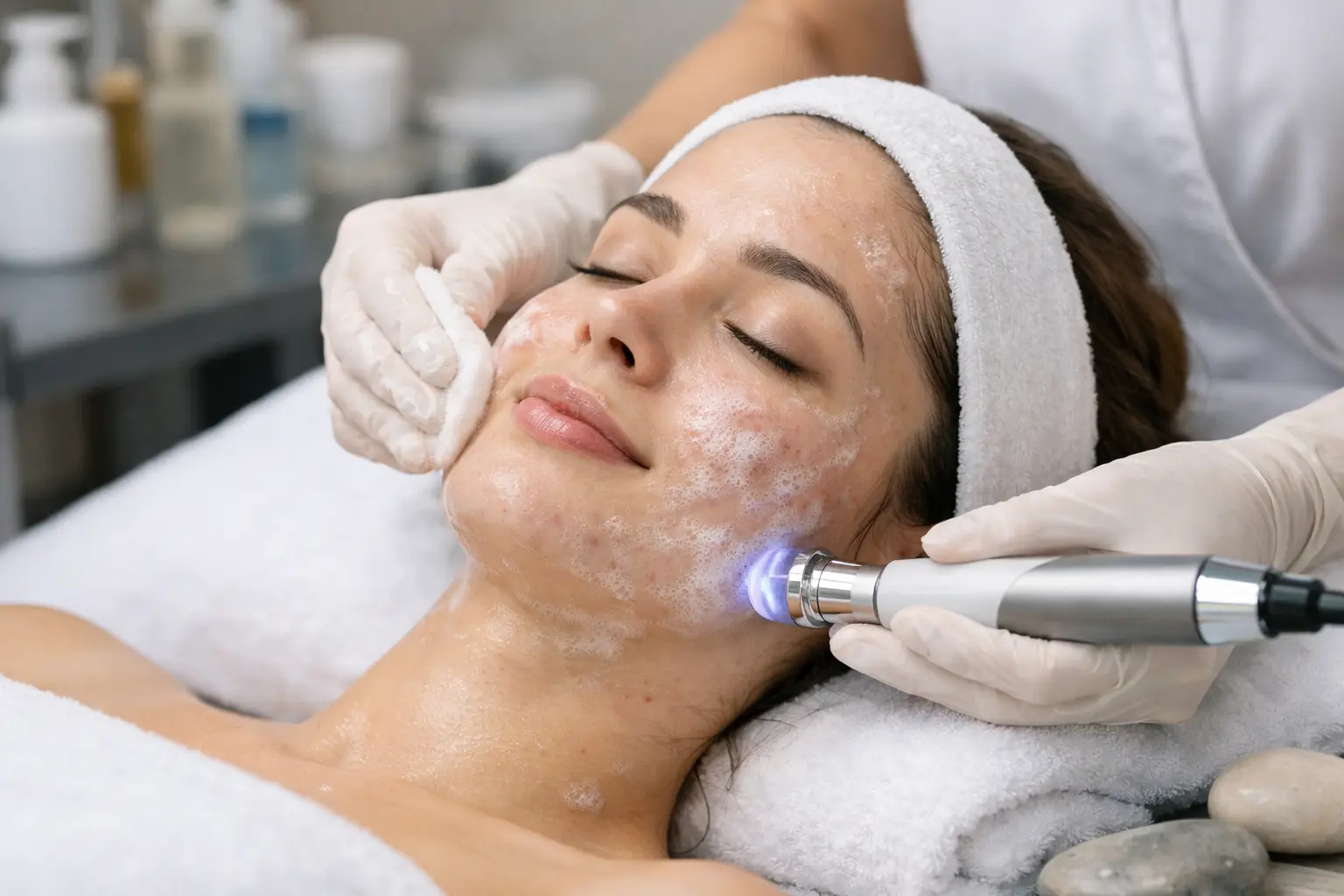
A quality acne facial usually starts with a thorough cleanse to remove oil, sunscreen, makeup and surface build-up. From there, the treatment may include exfoliation, steam or softening products, extractions where appropriate, calming masks and supportive modalities such as LED light therapy.
Each step has a purpose. Cleansing and exfoliation help loosen dead skin cells that trap oil inside the pore. Extractions, when done correctly, can clear existing congestion with less trauma than squeezing at home. Soothing products then help settle redness and reduce the chance of irritation after treatment.
This is where professional care stands apart. At-home picking often pushes bacteria and inflammation deeper into the skin. In-clinic extractions are performed with more control, better hygiene and far less risk of unnecessary damage.
Deep pore cleansing without over-stripping
One of the most valued acne facial treatment benefits is a cleaner, fresher skin surface without that tight, stripped feeling harsh products can cause. Acne-prone skin still needs balance. If the skin barrier becomes too dry or irritated, oil production can increase and sensitivity can worsen.
A professional facial aims to clear pores while maintaining skin comfort. That balance matters, especially for clients who have already tried strong products and ended up with flaky, reactive skin.
Better management of blackheads and congestion
Blackheads, whiteheads and under-the-skin bumps rarely disappear with cleansing alone. Once build-up becomes compacted, it often needs professional help to lift and clear safely. Regular acne facials can reduce recurring congestion and improve how smooth the skin feels.
This can be especially helpful before events or during periods when skin tends to become more clogged, such as seasonal changes, high stress or after wearing heavier makeup more often.
Benefits beyond active breakouts
Acne facials are not only for severe acne. They can also improve the lingering effects that make skin feel uneven even when there are fewer active pimples. Texture, dullness and post-acne marks can all affect how polished the skin looks.
By supporting cell turnover and reducing congestion, these treatments can help skin appear brighter and more refined. Makeup often sits more evenly afterwards, and clients commonly notice their skin feels smoother to the touch.
There is also a confidence factor that should not be overlooked. When your skin is calmer and more predictable, your daily routine becomes easier. You spend less time trying to cover breakouts and less energy worrying about how your skin will look by the end of the day.
Reduced inflammation and redness
Not all acne is heavily congested. Some clients struggle more with inflamed, sore breakouts and general redness. In these cases, the best facial is usually not the most aggressive one. Calming ingredients and LED light therapy may be more beneficial than intensive exfoliation.
This is where treatment choice really matters. The right acne facial can help settle visible irritation while supporting recovery, rather than pushing already stressed skin further.
Support for post-acne marks
Marks left behind after breakouts can be just as frustrating as the breakouts themselves. While deeper pigmentation and scarring often need a broader treatment plan, acne facials can support gradual improvement by keeping the skin clear, encouraging turnover and reducing repeated inflammation.
Put simply, fewer new breakouts often means fewer new marks to deal with.
Why professional treatment beats DIY trial and error
There is no shortage of acne advice online, and not all of it is helpful. Many people end up layering acids, scrubs, drying lotions and trending products all at once. The result is often irritated skin that is both oily and dehydrated.
Professional treatment brings structure. Instead of treating every breakout with the strongest product possible, a facial plan can address what your skin actually needs at that moment. Sometimes that means clearing congestion. Sometimes it means calming the skin first and rebuilding tolerance slowly.
That tailored approach is one of the most practical acne facial treatment benefits. It can save time, reduce wasted product spending and help avoid the cycle of over-treating then trying to recover.
How often should you have an acne facial?
It depends on your skin, the severity of congestion and what else is in your routine. Some clients benefit from a series of treatments close together at the start, followed by maintenance appointments. Others do well with occasional facials to keep pores clear and support skin health.
The important part is not treating facials as a once-off fix. Acne is often influenced by hormones, lifestyle, skincare choices and skin sensitivity, so improvement usually comes from regular care rather than a single appointment.
At a professional clinic such as Ibeauty Medispa, that treatment plan can be adjusted as your skin changes. If inflammation settles but texture remains, the focus may shift. If your skin becomes more sensitive, treatment intensity can be refined.
Who sees the best results?
Clients with clogged pores, mild to moderate acne, excess oil and uneven texture often respond well to professional acne facials. They are also a strong option for people who want expert support without jumping straight into more intensive treatments.
That said, severe or cystic acne may need a more comprehensive approach. A facial can still be helpful, but expectations should be realistic. In some cases, the goal is to reduce congestion, calm the skin and support better skin function rather than achieve overnight clearance.
Pregnancy, skin sensitivity, active barrier damage and current use of prescription acne medication can also affect what is suitable. Good treatment is never about doing the most. It is about doing what is right for your skin.
Getting more from your results
A professional facial works best when it is supported by sensible home care. That usually means a gentle cleanser, appropriate hydration, targeted active ingredients if recommended, and daily SPF. Picking at the skin between appointments can undo progress quickly, especially if inflammation is already an issue.
Lifestyle factors also play a role. Stress, poor sleep, inconsistent product use and heavy occlusive makeup can all affect the skin. You do not need a perfect routine to see improvement, but consistency helps.
The strongest results usually come from a combination of in-clinic treatment and realistic at-home support. That is how skin moves from temporary improvement to a more reliably clear, balanced appearance.
Clearer skin is rarely about one miracle product or one lucky week. It is usually the result of expert treatment, the right timing and a plan that respects your skin instead of fighting it. If your breakouts keep returning, a professional acne facial may be the step that helps your skin settle, strengthen and finally start behaving more like you want it to.