
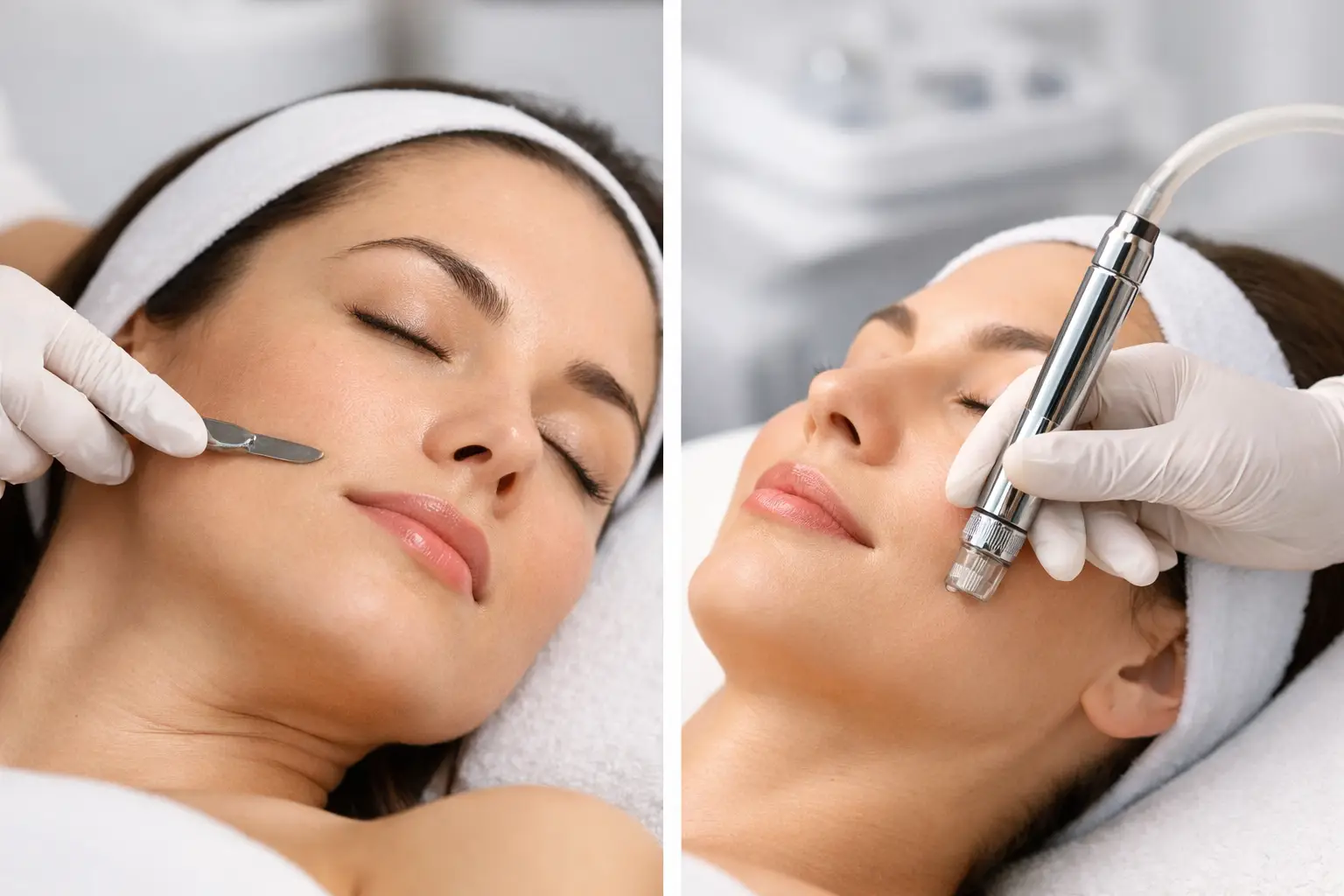
Dermaplaning vs Microdermabrasion Facial Compared
A facial should leave your skin looking refined, not red, stressed or hidden under makeup for the next few days. When comparing a dermaplaning vs microdermabrasion facial, the best choice comes down to what you want to correct: surface fuzz and a dull finish, or congestion, uneven texture and a build-up of dead skin cells.
Both are professional exfoliation treatments designed to reveal fresher-looking skin. They work differently, however, and that difference matters when you are preparing for an event, managing breakouts or building a regular skin-maintenance routine. A proper skin assessment is the starting point for results that look smooth, polished and naturally radiant.
Dermaplaning vs microdermabrasion facial: the difference
Dermaplaning is a manual exfoliation treatment. A trained therapist uses a sterile, single-use surgical blade at a controlled angle to gently lift away the outermost layer of dead skin cells along with fine facial hair, often called peach fuzz. The treatment focuses on the skin’s surface and creates an exceptionally smooth canvas.
Microdermabrasion uses a controlled device to exfoliate the top layers of the skin. Depending on the system, this may involve a diamond-tipped handpiece and suction, or fine crystals. It is designed to polish away dull surface cells while helping to clear superficial congestion. The suction component can also make it particularly useful for clients who feel their skin looks blocked, rough or lacklustre.
Neither treatment is about aggressively stripping the skin. Done well, both are precise, controlled services tailored to the condition of your complexion on the day.
Choose dermaplaning for a silky, makeup-ready finish
Dermaplaning is a favourite before special occasions because the result is immediately visible. Without the layer of surface debris and fine hair, foundation often applies more evenly and skincare can sit beautifully on the skin. It is an excellent option when your priority is a clean, soft glow rather than treating deeper congestion.
Fine facial hair is completely normal, but some clients prefer its appearance removed for a more polished finish. Dermaplaning handles this gently and efficiently. It will not make hair grow back darker, thicker or faster. Hair regrowth is determined by the follicle, not by removal at the skin’s surface.
This facial can suit many skin types, especially normal, dry or mature skin that feels dull. It may also be a better choice than a more abrasive treatment for someone whose main concern is rough texture around the cheeks, forehead or jawline.
Dermaplaning is not ideal over active, inflamed acne, open lesions, sunburn, eczema flare-ups or irritated skin. Passing a blade over active breakouts can spread bacteria and further aggravate the area. If there is significant sensitivity or a compromised skin barrier, your therapist may recommend calming care first.
Choose microdermabrasion for texture and congestion
Microdermabrasion is often the stronger match when dead skin build-up, visible pores, mild congestion and uneven texture are your key concerns. It gives the skin a thorough surface polish and can leave it looking brighter, smoother and more refreshed. With a tailored approach, it can be included in a course of facials for clients working towards clearer, more even-looking skin.
The treatment is frequently chosen for skin that feels thickened, tired or bumpy, particularly through the T-zone. It can also support a routine for the appearance of superficial acne marks and fine lines, although realistic expectations are essential. Microdermabrasion is not a replacement for medical treatment of acne, nor will one appointment erase established scarring.
You may experience temporary pinkness, mild warmth or sensitivity after a microdermabrasion facial. This usually settles quickly, but timing matters. If you have a major event, it is sensible to book your first session well beforehand rather than testing a new treatment the day before.
Microdermabrasion may not be suitable if you have active acne, rosacea, broken capillaries, an infection, very reactive skin or a recent peel. People using prescription retinoids, or who have recently had injectables, laser or other advanced treatments, should always mention this during their consultation. Your treatment plan needs to respect what your skin has already been through.
Results, sensation and downtime
Dermaplaning usually feels light and comfortable. Most clients describe a gentle scraping sensation rather than pain. There is little to no downtime, although a small amount of redness is possible, especially on sensitive skin. The immediate result is smoothness, softness and a brighter surface.
Microdermabrasion feels like a mild buffing or suction sensation. Treatment intensity can be adjusted, which is why professional assessment and technique make such a difference. The skin can look instantly fresher, while the feel of congestion and roughness may improve further over the following days.
For both treatments, the glow is real, but it is not permanent. Skin naturally sheds cells every day and continues to encounter makeup, pollution, sunscreen and changing weather. Regular appointments, paired with the right home care, help maintain the result without over-exfoliating.
How often should you book?
Dermaplaning is commonly booked every four to six weeks, depending on your skin condition, hair growth and beauty goals. It can be a valuable monthly reset for clients who enjoy a smooth, luminous finish and want makeup to glide on with less effort.
Microdermabrasion may be booked every two to four weeks as part of a targeted facial plan, although the right frequency varies. Skin prone to dryness or sensitivity may need more time between treatments, while congested skin may benefit from a carefully spaced series. More exfoliation is not always better. Overdoing it can weaken the skin barrier and lead to tightness, irritation or breakouts.
A therapist should consider your current skincare, lifestyle and upcoming appointments. For example, if you are planning cosmetic tattooing, waxing, a peel or an important event, treatment timing should be organised to keep your skin calm and in its best condition.
Aftercare that protects your glow
After either facial, treat your skin with care. Use a gentle cleanser, a nourishing moisturiser and broad-spectrum SPF every day. Freshly exfoliated skin can be more vulnerable to UV exposure, and sun protection is essential for maintaining an even-looking complexion.
For the next few days, avoid scrubs, exfoliating acids, retinol and strong active products unless your therapist has advised otherwise. Keep hands away from your face, skip picking at any small imperfections and avoid excessive heat from saunas, steam rooms or very hot showers if your skin feels warm or sensitive.
Makeup can often be worn after dermaplaning, but clean brushes and complexion products are a must. If your skin is flushed after microdermabrasion, allowing it to breathe for the rest of the day can be the more comfortable choice.
Can you combine the treatments?
Dermaplaning and microdermabrasion should not automatically be performed together. Both exfoliate the skin, so layering them without a clear clinical reason can be too much for many complexions. In some professional facial plans, a therapist may alternate treatments across appointments or combine one with hydrating, calming or LED-focused care.
The best pairing depends on your skin’s tolerance and your goal. If you want a flawless makeup base before a celebration, dermaplaning may be enough. If you are working on ongoing rough texture and superficial congestion, microdermabrasion may offer the more relevant correction. For dry, dull skin, a hydrating facial after gentle exfoliation can create a beautiful balance.
The right facial is the one your skin can handle
There is no single winner in the dermaplaning vs microdermabrasion facial decision. Dermaplaning delivers a refined, hair-free surface and instant softness. Microdermabrasion offers a more device-led polish for skin that feels congested or uneven. Your skin type, active concerns, tolerance and treatment history should lead the choice.
At Ibeauty Medispa, a personalised consultation helps match your facial to the result you want, whether that is a smoother makeup finish, clearer-looking pores or a fresh confidence boost. Choose quality over quantity, listen to your skin, and book the treatment that supports its healthiest-looking glow.