
Guide to Saline Tattoo Removal: What to Expect
A cosmetic tattoo should support your confidence, not leave you feeling stuck with an old shape, unwanted colour or uneven result. This guide to saline tattoo removal explains what the treatment can do, when it may be suitable and why a careful professional assessment matters before any pigment removal begins.
What is saline tattoo removal?
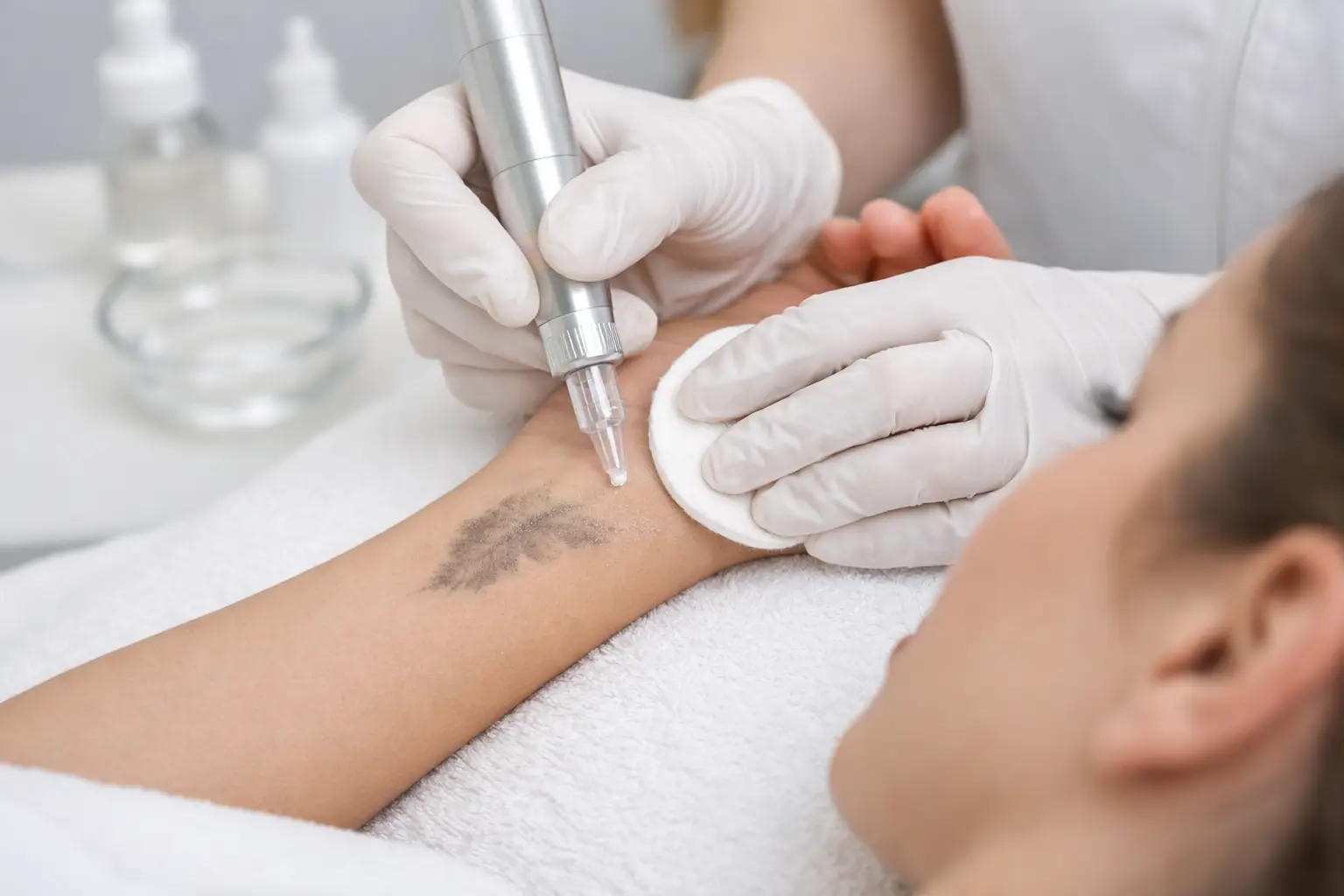
Saline tattoo removal is a cosmetic tattoo lightening technique most commonly used on eyebrow tattoos, microblading, lip blush and eyeliner tattoo. A trained technician uses a tattooing device to place a sterile saline solution into the area of unwanted pigment. As the skin heals, some pigment may be drawn towards the surface and lifted away with the natural healing process.
It is not an instant eraser, and it does not chemically dissolve tattoo pigment beneath the skin. Instead, it is a controlled treatment designed to gradually soften or lighten pigment over a series of appointments. Results vary based on the type of pigment, its depth, the age of the tattoo, skin condition and how the area heals.
For cosmetic tattoo clients, saline removal can be particularly helpful when the concern is a brow shape that no longer suits the face, pigment that has healed too dark, or a result that needs lightening before a correction or fresh cosmetic tattoo can be considered.
When saline removal may be the right choice
The best removal method depends on your individual tattoo, rather than simply choosing the fastest-sounding option. Saline treatment is often considered for small, concentrated areas of cosmetic tattoo pigment and can be an option for clients who prefer a non-laser approach.
It may be suitable when microblading strokes have blurred, eyebrow tattoo colour has changed over time, or a previous cosmetic tattoo sits outside your preferred brow shape. It can also be used to lighten a small area where pigment needs correcting, rather than treating the full tattoo.
Fresh cosmetic tattoo work may sometimes be assessed for emergency saline removal. This is time-sensitive and should only be performed by an experienced professional after an in-person evaluation. Trying to scrub, pick or treat fresh pigment at home can cause unnecessary trauma, infection and uneven healing.
Laser tattoo removal may be more appropriate for some pigment colours, deeper saturation or larger body tattoos. In other cases, a combination approach may be recommended. Quality over quantity matters here: treating the correct concern with the right method is safer than rushing into repeated removal sessions.
Your consultation comes first
A proper consultation is the foundation of safe, considered tattoo removal. Your technician should assess the tattoo area, review the pigment’s appearance and ask about your cosmetic tattoo history. If you know the brand or colour of pigment used, bring that information along, but do not worry if you do not have it.
The appointment should also cover your skin sensitivity, previous reactions, medications, healing history and any medical factors that could affect treatment. Clients who are pregnant or breastfeeding, prone to keloid scarring, managing an active skin condition, taking certain medications or undergoing medical treatment may need to postpone treatment or seek medical advice first.
Photos taken before each appointment are valuable. Cosmetic tattoo pigment can fade unevenly, and clear progress images help you and your technician make decisions based on visible change rather than memory alone.
What happens during the treatment?
The area is cleansed and mapped with precision before treatment begins. Depending on the area and your comfort level, a topical numbing product may be used. The saline solution is then introduced through controlled passes over the unwanted pigment.
Most clients describe the sensation as manageable, although sensitivity varies significantly around the brows, lips and eyes. The treatment area may look red, swollen or slightly weepy immediately afterwards. This is a normal response to a skin treatment, but your technician should explain what is expected for your specific area and what would require follow-up.
A light scab or crust commonly forms during the healing period. This is part of the process. It can be tempting to touch it, especially when you are eager to see lighter pigment, but picking can remove healing skin before it is ready and increase the chance of scarring or patchy results.
Healing after saline tattoo removal
Healing is where patience protects your result. The treated skin needs time to settle before anyone can accurately judge how much pigment has lifted. The area may initially appear darker, warmer in tone or more pronounced because of redness and surface healing. Once the skin has fully recovered, the true change becomes clearer.
Your technician will provide tailored aftercare instructions. In general, keep the area clean, avoid touching it with unwashed hands and allow any scabbing to shed naturally. Avoid makeup directly over the treated area until advised it is safe, and protect healing skin from direct sun exposure.
During the healing period, avoid:
- Swimming pools, spas, saunas and steam rooms
- Heavy sweating and high-intensity exercise for the advised period
- Exfoliants, retinol, acids and active skincare near the area
- Picking, scratching or attempting to remove scabs
For eyebrow removal, it is also wise to pause brow tinting, waxing, threading and other brow services until the skin has fully healed. The goal is to give the skin the calm, undisturbed conditions it needs to recover well.
How many sessions will you need?
There is no honest one-size-fits-all answer. Some clients see worthwhile fading after one treatment, while others need several sessions to reach a point where the tattoo can be corrected, covered or left to continue fading naturally.
Older, more superficial cosmetic tattoo pigment may respond differently from newer, densely packed pigment. Pigment that has migrated, healed deeply or contains a complex blend of colours can take more time. Your skin’s response and aftercare also influence the overall outcome.
Sessions must be spaced to allow complete healing. Booking treatments too close together does not force faster results. It can create more trauma for the skin and compromise the polished, natural-looking outcome you want. At Ibeauty Medispa, the focus is on a considered treatment plan that respects both your skin and your future brow options.
Can you have cosmetic tattooing again afterwards?
Often, yes, but only after the skin has completely recovered and there is enough fading to create a clean base for new work. A new cosmetic tattoo placed over residual pigment can heal differently from tattooing on untouched skin. The previous shape, undertone and remaining density all need to be assessed before choosing a new brow design or colour.
Sometimes full removal is not necessary. A skilled artist may recommend lightening selected sections first, then redesigning the brow with a shape that better suits your features. This can be a practical option for clients who want to move on from an old tattoo without chasing total pigment removal.
The right timing depends on your healing, not a fixed calendar date. Rushing straight into new brows before the area is ready can affect pigment retention and make colour correction more difficult.
Risks and realistic expectations
Saline tattoo removal is a professional skin procedure, and it carries risks. Redness, swelling, tenderness, scabbing and temporary changes in skin colour can occur. Less common but more serious concerns include infection, prolonged irritation, scarring and uneven pigment fading.
Results cannot be guaranteed. Cosmetic tattoo pigments respond differently, particularly when the original procedure, pigment ingredients and implantation depth are unknown. Be cautious of anyone promising complete removal in one session or offering treatment without asking about your health, skin and tattoo history.
Choose an experienced cosmetic tattoo professional who works with appropriate hygiene standards, explains aftercare clearly and is prepared to say when another approach may suit you better. A transparent consultation is a sign of care, not a barrier to booking.
If an old cosmetic tattoo no longer reflects your style, a personalised removal assessment can provide a clear next step. With the right technique, realistic expectations and patient healing, you can make room for brows and features that feel like you again.