
Can Dermaplaning Help Acne Marks?
If acne has settled but the reminders are still there, it is natural to ask whether a skin-smoothing treatment can make a visible difference. Can dermaplaning help acne marks? In some cases, yes – but the result depends on what kind of marks you have, how active your acne is, and whether dermaplaning is the right treatment for your skin at that stage.
Dermaplaning is often chosen for the instant glow it gives the skin, but its benefits go beyond removing peach fuzz. It can improve surface texture, lift away built-up dead skin cells and help the complexion look brighter and more even. What it does not do is treat every type of post-acne concern equally. That distinction matters if you want real results rather than short-term disappointment.
Can dermaplaning help acne marks or just skin texture?
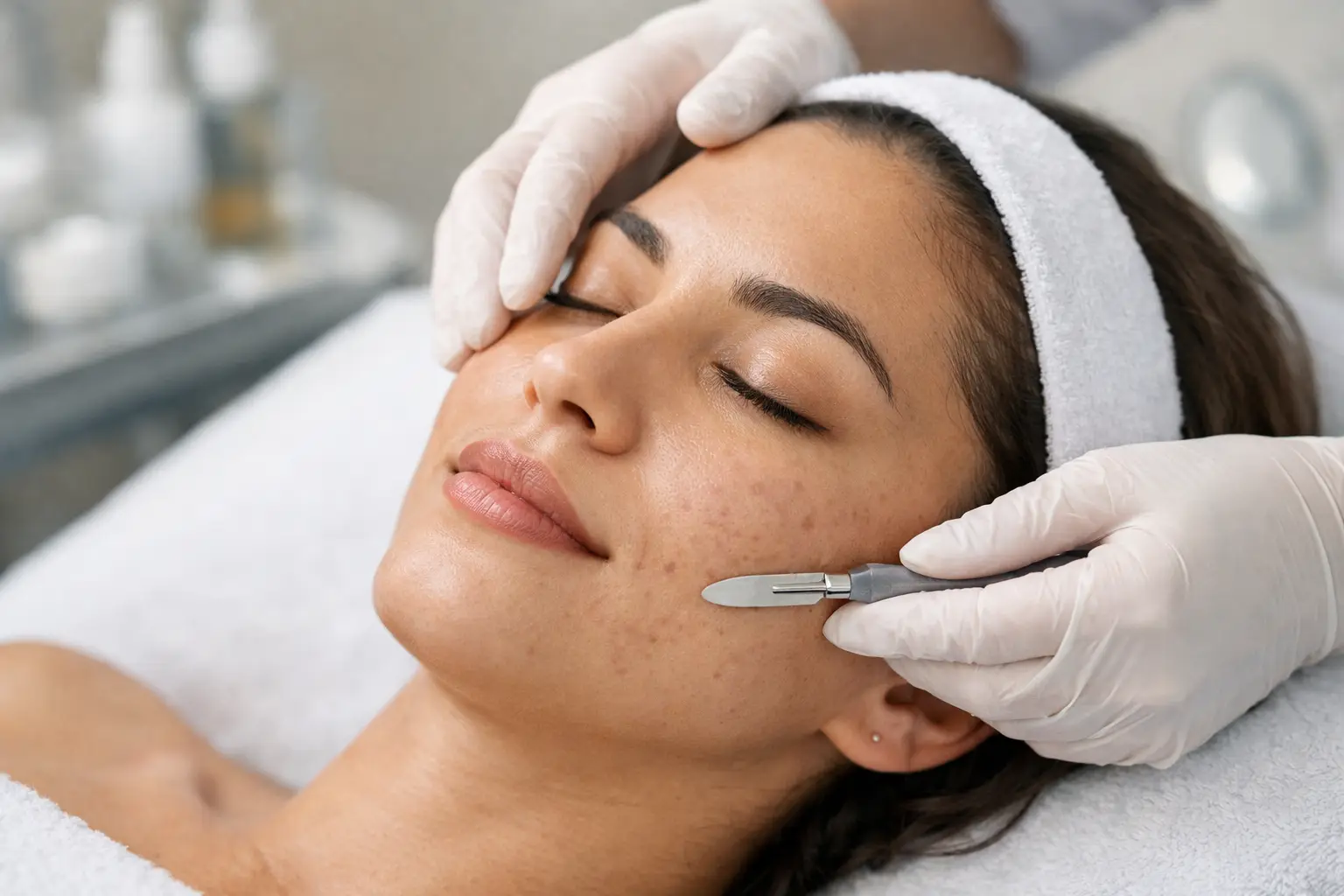
Dermaplaning is a manual exfoliation treatment performed with a sterile surgical blade. The blade gently skims the outermost layer of dead skin and fine facial hair from the surface of the skin. That freshens the complexion immediately and can make the skin feel smoother, softer and more polished.
When people talk about acne marks, they are often referring to a few different concerns. Some mean the red or brown marks left after a breakout. Others mean uneven texture, shallow indents or actual acne scarring. Dermaplaning can help some of these concerns more than others.
It is most helpful for superficial issues. If your skin looks dull after breakouts, feels rough, or has mild unevenness from congestion and dry build-up, dermaplaning can improve the overall finish of the skin. It may also help post-inflammatory pigmentation appear a little brighter over time because regular exfoliation encourages cell turnover.
If you have deeper pitted scars, raised scars, or ongoing inflamed acne, dermaplaning is usually not the treatment to rely on by itself. Those concerns often need a more targeted skin treatment plan.
What types of acne marks can dermaplaning improve?
The best candidates for dermaplaning are clients with non-active acne and post-breakout skin that needs refinement. This includes surface roughness, mild textural irregularity and some forms of post-acne discolouration.
Red marks after pimples, often called post-inflammatory erythema, may look less obvious when the skin is smoother and less congested, but dermaplaning does not directly treat the underlying blood vessels causing that redness. Brown marks, or post-inflammatory hyperpigmentation, can respond better because exfoliation helps lift dull, pigmented cells from the surface. Results are usually gradual, not dramatic after one session.
For very shallow textural acne marks, the skin may appear more even because dermaplaning removes the dry, uneven surface that catches light. Makeup also tends to sit better afterwards, which can make marks look softer and less noticeable.
Deep ice pick scars, boxcar scars and rolling scars are different. These sit below the skin surface and are caused by changes in collagen. Dermaplaning cannot cut into or rebuild those areas safely, so the improvement is limited.
When dermaplaning is not the right choice
This is the part many people skip, and it is the part that protects your skin. If you have active acne, especially inflamed pustules, cystic breakouts or sore congestion, dermaplaning may not be suitable. Gliding a blade over active lesions can irritate the area, spread bacteria across the skin and make healing harder.
Skin that is sensitised from strong actives can also react poorly. If you are using prescription acne products, retinoids, exfoliating acids or benzoyl peroxide, your skin barrier may already be compromised. In that case, dermaplaning can feel too aggressive unless your routine is adjusted first.
Clients with highly reactive skin, rosacea, broken capillaries or eczema may need a different approach as well. A good skin treatment is never about choosing the most popular option. It is about choosing the safest and most effective one for your skin condition right now.
Why dermaplaning can make post-acne skin look better
The strength of dermaplaning is in what it does at the surface. Acne-prone and post-acne skin often holds onto dead skin cells unevenly. That creates a rough finish, blocks the way skincare penetrates and makes marks look more obvious than they are.
By removing that layer cleanly and evenly, dermaplaning can help the complexion reflect light better. Skin often looks brighter immediately after treatment. Serums and hydrating products also tend to absorb more effectively afterwards, which supports a healthier-looking barrier and smoother finish.
For clients who feel their skin has never looked quite polished since a period of breakouts, this can be a very worthwhile treatment. It is not pretending to erase scars. It is improving the overall quality, clarity and smoothness of the skin so acne marks do not dominate the face.
Can dermaplaning help acne marks faster than other treatments?
It can give faster visible smoothness than many other treatments, but faster does not always mean deeper. Dermaplaning is appealing because the skin often looks fresher straight away. There is usually little to no downtime, and many clients enjoy that immediate refined finish before an event or as part of ongoing skin maintenance.
For long-term acne mark correction, it may work best as part of a broader plan. Treatments such as LED light therapy, microdermabrasion, gentle corrective facials or professional-grade skin management may be more appropriate depending on whether the concern is pigmentation, congestion, scarring or inflammation.
That is where professional assessment matters. A treatment that gives glow and smoothness is valuable, but only if it is matched properly to your goal.
What to expect after a dermaplaning treatment
After dermaplaning, most skin looks brighter and feels very smooth. Makeup application can look cleaner, and skincare often feels more effective. If your acne marks are mostly superficial, you may notice they appear softer because the skin surface is more even.
You should not expect deep scars to disappear after one appointment, or even after a course of appointments. Dermaplaning is a surface treatment. Its role is refinement, not structural scar revision.
Sun protection is essential afterwards. Freshly exfoliated skin is more vulnerable to UV exposure, and that matters if pigmentation is one of your concerns. Without proper aftercare, existing marks can linger longer.
It is also important not to over-exfoliate between treatments. Using scrubs, acids and active products too aggressively after dermaplaning can trigger irritation, and irritated skin rarely heals beautifully.
How often should you have dermaplaning for acne marks?
For most clients, dermaplaning is done every four to six weeks. That timing allows the skin to complete its natural renewal cycle without pushing it too hard. More frequent treatment is not automatically better, especially if your skin is reactive or you are managing post-acne sensitivity.
Consistency matters more than intensity. A steady, professionally guided skin plan usually delivers better results than chasing quick fixes. If your concern is lingering marks rather than active acne, regular maintenance can support a clearer, more even complexion over time.
At Ibeauty Medispa, this is exactly why treatment selection matters. The goal is not to do more to the skin. It is to do what works, at the right time, with visible care and precision.
Is dermaplaning worth it for acne marks?
If your acne marks are mainly mild discolouration, rough texture or post-breakout dullness, dermaplaning can absolutely be worth it. It offers immediate smoothness and can help your skin look fresher, cleaner and more refined. For clients wanting polished skin with minimal downtime, it is a strong option.
If your concern is active acne or deeper scarring, the answer is more measured. Dermaplaning may still have a place later, once inflammation is under control, but it should not be treated as the main solution.
The most useful question is not simply can dermaplaning help acne marks. It is which acne marks, at what stage, and on what skin. When that answer is clear, the treatment choice becomes much smarter.
Healthy, even-looking skin rarely comes from a one-size-fits-all approach. If acne marks are affecting your confidence, the best next step is choosing a treatment plan that respects both your skin condition and the result you actually want.