
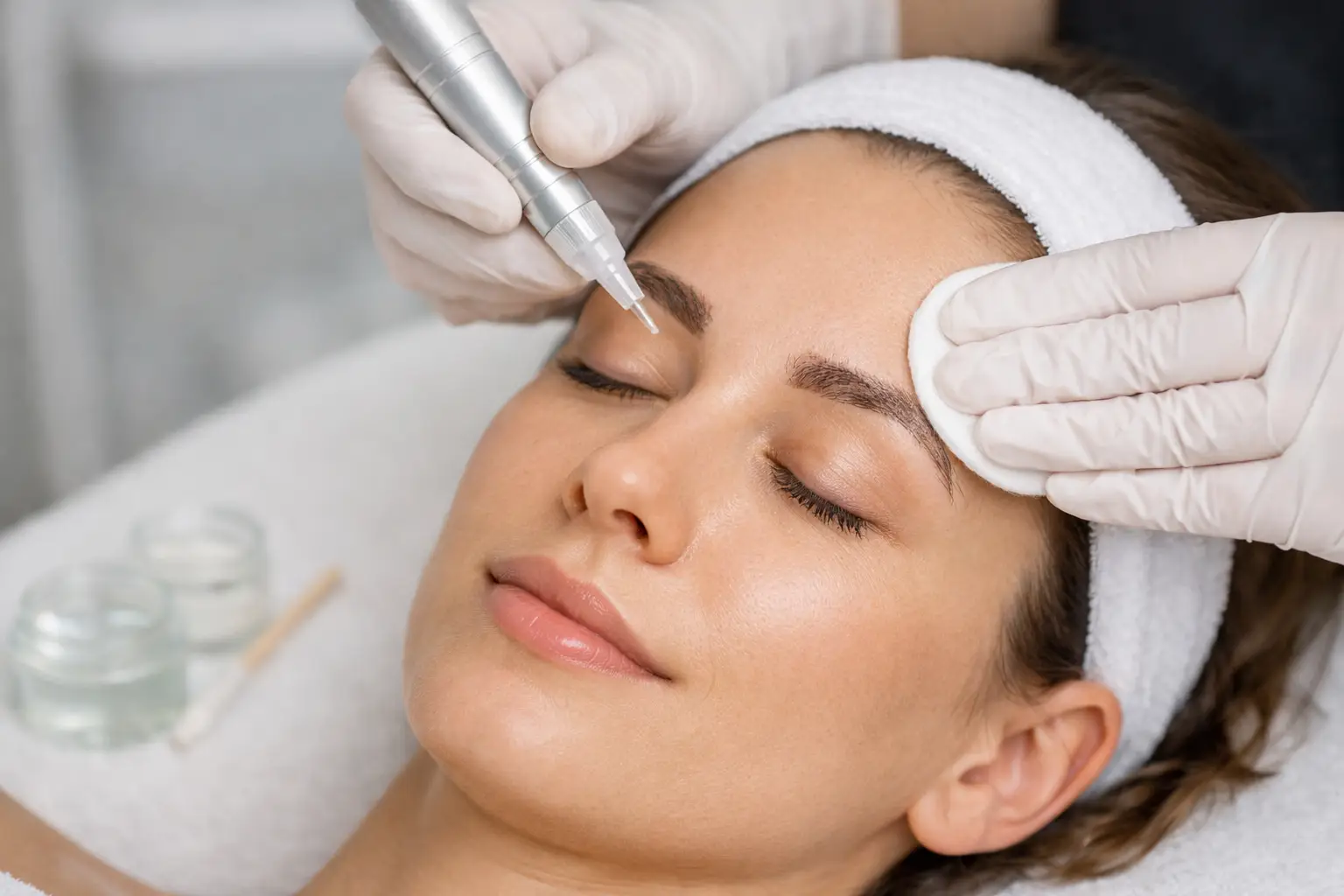
Saline Tattoo Removal Eyebrows Explained
When brow tattoo work does not heal the way you hoped, every glance in the mirror can feel disappointing. Saline tattoo removal eyebrows is a professional option for clients who want to fade unwanted cosmetic tattoo pigment with a gentler, skin-conscious approach, especially in the delicate brow area.
For many clients, the issue is not that they dislike cosmetic tattooing itself. It is usually the shape, the saturation, the colour shift, or an old style that no longer suits their face. Brows sit front and centre, so even a small imbalance can affect your whole look. That is why removal should be treated with the same level of precision as the original tattoo.
What is saline tattoo removal for eyebrows?
Saline tattoo removal for eyebrows is a technique that uses a specialised saline-based solution to lift and draw pigment out of the skin. The treatment is commonly used on cosmetic tattoo areas such as brows, eyeliner and lips, but eyebrows are one of the most requested zones because shape and symmetry matter so much.
Unlike laser, which targets pigment with light energy, saline removal works through a different process. A technician implants the saline solution into the skin where the unwanted pigment sits. As the area heals, the skin forms a light scab and some of the pigment is carried up and out through the surface. The result is gradual fading over a series of sessions rather than instant removal.
That gradual approach suits many brow clients. Eyebrow skin is delicate, the hair matters, and the goal is often refinement rather than complete erasure. In some cases, clients want enough fading to allow a better shape correction or a fresh cosmetic tattoo later on.
Why clients choose saline tattoo removal eyebrows
The biggest reason is correction. Brows can heal too dark, too ashy, too warm, too thick, or simply too far from the natural brow line. Saline tattoo removal eyebrows can help reduce old pigment so a new design has a cleaner foundation.
It is also a strong option for clients with old microblading or machine brow work that has blurred over time. What looked crisp years ago may now appear soft, grey, patchy or uneven. Removing or lightening that old work can make a major difference to the final result of any future brow treatment.
Some clients choose saline because they want a non-laser option. That can be appealing for cosmetic tattoo on the face, particularly when there is concern around colour changes, skin sensitivity, or suitability for certain pigment types. It does not mean saline is automatically better in every case. It means the method can be very effective when used for the right client, the right pigment and the right treatment plan.
How the treatment works in practice
A proper consultation comes first. Brow removal is never a one-size-fits-all treatment. Your technician needs to assess the type of cosmetic tattoo, the depth of the pigment, how old it is, the visible colour, your skin condition and your brow goals.
During the appointment, the area is cleansed and the saline solution is worked into the skin in a controlled way, similar to cosmetic tattoo application. The aim is not to overwork the skin. Precision matters because aggressive technique can create unnecessary trauma, especially in the brow area where the skin is thin and visible.
After treatment, the skin usually looks red and can feel tender. A dry scab forms as part of the healing process. This stage matters because the pigment lifting happens as the skin repairs itself. Picking, rubbing or softening the scab too early can affect the result and increase the risk of poor healing.
Most clients need multiple sessions. The exact number depends on how much pigment is present and how stubborn it is. Lighter saturation may fade more quickly, while old, dense or layered brow tattooing can take longer.
What results should you realistically expect?
Saline brow removal works best when expectations are clear from the start. It is a fading treatment, not a magic eraser. Some clients see a noticeable lift after one session. Others need a series of treatments before the brows are light enough for correction.
Pigment type plays a big role. Some colours release more easily than others. Depth matters too. If previous work was implanted deeply, the fading process can be slower. Skin response also varies from client to client, which is why experienced assessment is so important.
In cosmetic tattoo correction, success is not always about complete removal. Sometimes the best outcome is creating enough space to redesign the shape, neutralise unwanted tones, or soften the old work so the next brow treatment looks clean and balanced.
Healing after saline tattoo removal eyebrows
Healing is one of the most important parts of the process. Right after treatment, the brows can appear red, slightly swollen and darker in areas where the skin has been worked. Over the following days, the area dries and forms a protective scab.
This stage can test your patience, especially when the brows look rough before they look better. That is normal. The key is to let the skin heal without interference. Your technician will provide aftercare instructions, and following them closely gives you the best chance of a clean result.
Healing time varies, but clients should allow several weeks before reassessment or retreatment. The skin may look settled on the surface before it has fully recovered underneath. Rushing the next session too soon can compromise both the skin and the result.
Because brows are such a visible feature, it helps to plan treatment timing around work, events and social commitments. You do not want to book your appointment right before a wedding, photoshoot or major function and then feel stressed during the healing phase.
Is saline removal safe for eyebrow hair and skin?
When performed correctly, saline removal is designed to target unwanted pigment while respecting the skin. That said, this is still a corrective treatment and it needs skilled hands. Brow skin can scar if treated poorly, and overworking the area is never worth it.
Clients often worry about brow hair. In most cases, the goal is to preserve the natural brow as much as possible. Professional technique, correct depth and proper aftercare all support that outcome. If the skin is already compromised from previous tattooing or repeated corrections, your technician may recommend spacing sessions further apart or adjusting the plan.
This is where choosing a specialist matters. Cosmetic tattoo correction is not just about removing pigment. It is about protecting the skin so the brow area can still look soft, healthy and suitable for future beauty treatments.
Saline tattoo removal eyebrows vs laser
Both methods have a place, and the right choice depends on the brow history, the pigment and the end goal. Laser can be highly effective for certain pigments, but it is not always the preferred starting point for cosmetic tattoo on the face. Some brow pigments can shift in colour under laser, and some clients simply prefer an alternative method.
Saline tattoo removal eyebrows offers a manual, controlled approach that many clients find appealing for brow correction. It can be especially useful when the aim is gradual lifting in a small, precise area. However, it may take more sessions than clients expect, and results are not identical for every skin type or tattoo history.
A good clinic will not pretend one method suits everyone. Honest advice matters. In some cases, saline is the best option. In others, a different removal strategy or a staged correction plan may be more appropriate.
Who is a good candidate?
This treatment can suit clients with unwanted microblading, faded cosmetic tattoo, poor brow shape, colour migration or old brow work that needs softening before a redo. It can also suit clients who want to lighten rather than fully remove their existing brows.
The best candidates are realistic, patient and prepared to commit to aftercare. If your skin is irritated, damaged or currently healing from another treatment, you may need to wait. Pregnancy, certain health conditions, medication and skin sensitivity can also affect suitability, so a proper consultation is essential.
At Ibeauty Medispa, the brow area is treated as a precision zone, not a quick fix. That matters because successful correction depends on both technical skill and restraint.
Choosing the right clinic for brow tattoo removal
A polished result starts long before the treatment begins. You want a clinic that understands cosmetic tattooing, facial symmetry, pigment behaviour and skin healing. Removal is not separate from beauty design. It is part of the same journey.
Ask how the treatment plan is tailored. Ask what sort of fading is realistic in your case. Ask how the skin is protected between sessions. A trustworthy provider will give you clear expectations, not exaggerated promises.
The right approach should feel considered and professional. Brows shape the face, so every adjustment needs to support your long-term result, whether that means clean removal, softer fading or preparation for your next set of perfect eyebrows.
If your current brow tattoo no longer reflects the look you want, correction can be the step that brings everything back into balance – and done properly, it gives you a stronger starting point for whatever comes next.