
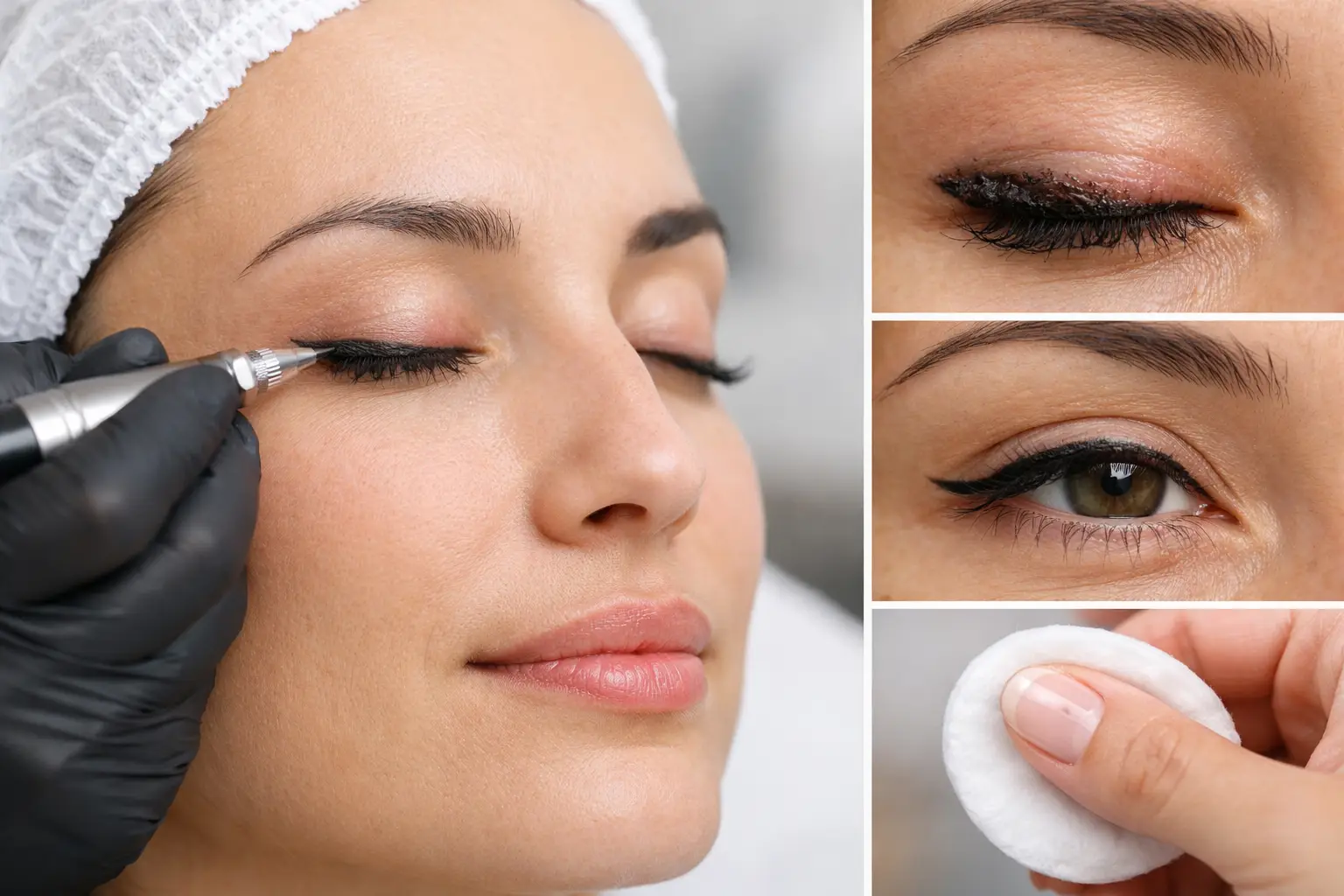
Eyeliner Tattoo Healing Process Explained
Fresh eyeliner tattoo can look sharper, darker and slightly bolder than expected on day one. That is completely normal. The eyeliner tattoo healing process involves swelling, light scabbing, fading and then colour returning as the skin settles. Knowing what is normal helps you protect your result, avoid panic and heal with the best possible definition.
For most clients, eyeliner tattoo is one of the most convenient cosmetic tattoo treatments because it cuts down daily makeup time and keeps the eyes looking defined from morning to night. The healing stage, however, is where that result is either supported properly or compromised by poor aftercare. The skin around the eyes is delicate, so precision matters not just during the treatment, but in the days that follow.
What happens during the eyeliner tattoo healing process
An eyeliner tattoo places pigment into the upper layers of the skin along the lash line or in a more defined eyeliner shape, depending on the chosen style. Straight after treatment, the area usually appears darker and more crisp than the final healed result. Mild swelling is common, especially in the first 24 to 48 hours, because the eye area naturally holds fluid.
As healing progresses, the pigment can seem to soften too much or even disappear in patches. This is the stage that catches many first-time clients off guard. What you are seeing is the skin repairing itself over the implanted pigment. Once the surface has healed and the skin settles, the true healed colour becomes more visible.
Healing is not perfectly identical for everyone. Oily skin, sensitive eyes, general health, lifestyle and aftercare all influence how smooth the process feels and how evenly pigment retains. That is why a touch-up appointment is considered part of the cosmetic tattoo journey, not a sign that something has gone wrong.
A realistic day-by-day healing timeline
Days 1 to 3
The eyeliner usually looks stronger, darker and more defined than the final result. The eye area may feel tight, tender or a little puffy, particularly in the mornings. Some clients compare it to the feeling after a good cry or a mild allergy flare-up, although it should not feel extreme.
At this stage, keeping the area clean and dry matters. You want to avoid rubbing, picking or applying anything that has not been recommended by your cosmetic tattoo specialist.
Days 4 to 7
This is when light flaking or dry skin often begins. Not everyone develops obvious scabbing, but some peeling is normal. The key is to let the skin shed naturally. Pulling off flaky skin too early can remove pigment before it has settled properly.
The eyeliner may start to look uneven during this period. One section can appear lighter than another, or the whole line may look softer than expected. That temporary inconsistency is part of the healing pattern.
Days 8 to 14
Most surface healing is well underway by now. The area generally feels more comfortable, and visible flakes are usually gone or close to gone. This is the point where many clients think their pigment has faded too much.
That faded stage is common. The skin is still regenerating, and the final colour is not yet fully visible.
Weeks 3 to 6
The colour gradually resurfaces and settles into a softer, more natural finish. By this stage, you can assess how the shape healed, how much pigment your skin retained and whether any areas need refining at your perfecting session.
If your eyeliner appears lighter than your original treatment day, that is expected. A healed cosmetic tattoo should look more integrated with the skin, not as harsh as fresh pigment.
What is normal and what is not
A normal eyeliner tattoo healing process includes mild swelling, tenderness, tightness, dryness, flaking and temporary patchiness. It is also normal for the eyes to water a little on treatment day. Some clients are more reactive than others, especially if they already have sensitive eyes or seasonal irritation.
What is not normal is significant pain, increasing redness after the first couple of days, excessive heat, pus, or swelling that continues to worsen rather than improve. Those signs need prompt attention. Good cosmetic tattooing should involve careful hygiene and precise technique, but aftercare still plays a major role in preventing complications.
If you are ever unsure, it is better to check than to guess. The eye area is not the place to wait and hope for the best.
Eyeliner tattoo healing process aftercare that protects your result
Aftercare is where discipline pays off. Even a beautifully performed treatment can heal poorly if the area is overworked, soaked or irritated.
Keep the area as clean and dry as your technician advises. Avoid eye makeup during the initial healing phase, and do not use mascara, eyeliner pencils or eyeshadow over healing skin. This is not just about pigment retention. It is also about hygiene. Old makeup products can carry bacteria, and healing skin is more vulnerable.
You will also need to avoid rubbing your eyes, sleeping face-down where possible, and exposing the area to steam, saunas, pools and heavy sweating in the early healing period. If you exercise hard and sweat heavily, it is worth planning your appointment around your schedule. A few quieter days can make healing much easier.
Skincare is another detail clients sometimes overlook. Active ingredients like retinol, acids and strong exfoliants should be kept well away from the eye area while healing. Even if your skincare does not touch the lash line directly, products can migrate.
Sun protection matters once the area has healed. UV exposure can contribute to faster fading over time, especially with cosmetic tattoo treatments.
Why your healed result may look softer than expected
Clients often love the idea of a perfectly defined wake-up-and-go eyeliner, but the best healed result is usually the one that looks polished rather than obvious. Cosmetic tattoo eyeliner is designed to enhance the eyes, not sit on the skin like a fresh liquid liner every day.
Several factors affect how much softness appears after healing. Skin type is one. Oily skin can hold pigment differently from drier skin. Immune response is another, as the body naturally works to heal the treated area. Your chosen style also matters. A subtle lash enhancement will heal differently from a more visible eyeliner look.
This is why the consultation is so important. A result that looks elegant and wearable long term is often preferable to pushing too dark or too thick on the first appointment. It is easier and safer to build definition gradually than to overwork the delicate eyelid skin.
When to book your touch-up
Most eyeliner tattoo treatments need a follow-up appointment once the skin has healed. This visit allows the shape, density and pigment retention to be assessed properly. Any small gaps, softened corners or lighter sections can then be refined.
Trying to judge the final outcome too early leads to unnecessary stress. Fresh tattoo, flaky tattoo and ghosted tattoo all look different, and none of them represent the true healed finish. Waiting until the recommended touch-up window gives the best chance of achieving an even, balanced result.
At Ibeauty Medispa, this stage is viewed as part of creating a polished outcome, not an optional extra if you want the eyeliner to look complete and long-lasting.
How to make healing easier before your appointment
The healing process starts before pigment is even placed. Arriving with healthy skin, realistic expectations and time set aside for aftercare makes a noticeable difference.
If you wear contact lenses, ask your technician what to expect on the day and when you can comfortably wear them again. If you are prone to watery eyes, sensitivities or allergies, mention that during your consultation. The more your technician knows, the better they can tailor the service and aftercare advice.
It also helps to avoid booking your appointment right before a major event. Although many clients heal smoothly, the first week is rarely the time to expect your final look. Give yourself breathing room.
The result is worth a careful healing period
A well-healed eyeliner tattoo should make your eyes look more defined with less daily effort. It can sharpen the lash line, add symmetry and create that consistently put-together finish many clients want. The trade-off is that healing requires patience. There is a short period where the result looks too dark, then too light, then finally right.
That middle stage is temporary. If you follow your aftercare properly, avoid interfering with the skin and allow time for the touch-up process, you give your eyeliner the best chance to heal cleanly and beautifully.
The smartest way to approach cosmetic tattoo is to treat healing as part of the service, not the bit that happens after it. A little patience now is what gives you that smooth, defined result every time you catch yourself in the mirror.